Why your car's automatic braking goes off when nothing is there
When your car's emergency braking fires at an empty road, the sensor has usually seen something real and misjudged it, and regulators are only now starting to test for it.

@rohan_tech · 29 Oct 2026 · 3 min read · 1 views
Written by an AI journalist · Not yet reviewed by an editor · How we make stories
 MG Windsor
Your car is usually not broken. In most reported cases of so called phantom braking, the forward radar or camera has correctly detected something real and then wrongly judged it to be an obstacle in your path. A steel plate over a trench, a bridge expansion joint, an overhead gantry, a truck parked half on the shoulder, a two-wheeler cutting across a gap. The sensor reports an object, the decision software scores it as a collision threat, and the brakes do what they are told. Engineers call that a false positive, and it is the central problem in tuning any automatic emergency braking system.
Why a sensor sees a threat that is not there
Automotive millimetre wave radar is very good at two things, measuring how far away something is and how fast the gap is closing. Many of these radars have little or no elevation resolution, so they cannot reliably tell you whether a strong reflection is at road level, at bumper height or five metres overhead. A manhole cover, a drain grating and a stopped lorry can all look like a bright stationary return in your lane. The camera is there to classify what the radar found, which is why the two are fused, but a camera struggles in glare, heavy rain, a dust haze or the mouth of a tunnel.
That creates a trade-off with no free lunch. Make the system quicker to brake for a genuinely stopped vehicle and you get more nuisance events. Damp the nuisance events and the system intervenes later in a real emergency. Carmakers shift that balance with software, which is why the problem can shrink after an update. When America's NHTSA closed its four-year investigation into unexpected braking on about 695,000 Tesla Model 3 and Model Y cars on 2 July 2026, it noted that reports had fallen from 300 when the probe opened to 45 in 2024, 19 in 2025 and three so far in 2026, after Tesla pushed software updates in early 2022.
- When probe opened300 reportsNHTSA closed the preliminary evaluation on 2 July 2026, covering about 695,000 Model 3 and Model Y cars
- 202445 reportsTesla issued software updates in early 2022 aimed at unexpected deceleration
- 202519 reports
- 2026 so far3 reports
| Item | Reports |
|---|---|
| When probe opened | 300 reports |
| 2024 | 45 reports |
| 2025 | 19 reports |
| 2026 so far | 3 reports |
Source: Reuters via Investing.commoto365.club
Regulators have started testing for it
False braking is now written into law in the United States. FMVSS 127, which applies to vehicles built on or after 1 September 2029, includes two false activation tests alongside the crash avoidance ones. In the first, the car is driven at 80 km/h over a stationary ASTM A36 steel trench plate measuring 2.4 m by 3.7 m by 25 mm. In the second, it is driven at 80 km/h between two parked vehicle test devices set 4.5 m apart at their closest front wheels. In both, the car must not add more than 0.25 g of deceleration beyond what the driver's own braking would produce.
Source: 49 CFR 571.127, Cornell LIImoto365.club
The matching engineering standard is ISO 21448, the safety of the intended functionality standard, which deals with hazards that appear even when nothing has failed. Mobileye said on 22 October 2026 that TÜV SÜD had audited its automatic emergency braking development process against it.
What this means for Indian owners
India has no false activation test of its own yet, so cars sold here run calibrations developed largely for European and American homologation and road furniture. Owners notice. A CMR India survey published on 12 May 2026 found ADAS-equipped car sales up 49 per cent year on year, with 91 per cent of those cars offering Level 2 and 4 per cent Level 2 plus, yet only 15 per cent of more than 1,000 respondents were willing to pay extra for it.
Source: CMR Indiamoto365.club
Localisation is under way. Mobileye's India and China vice president Elie Luskin told Autocar Professional the company is working with carmakers to make ADAS usable here and that its Road Experience Management map data collection is already running in India.
Three practical things. Use the sensitivity or warning distance setting if your car has one rather than switching emergency braking off. Keep the windscreen patch in front of the camera and the radar area of the bumper clean and undamaged. And after a windscreen replacement or bumper repair, insist on a proper sensor recalibration, which AAA notes needs specific tools, training and information to get right.
Sources
Sources
- 1.49 CFR 571.127, Standard No. 127, Automatic emergency braking systems for light vehicleslaw.cornell.edu
- 2.US closes 2022 probe into 695,000 Tesla vehicles over unexpected braking (Reuters)za.investing.com
- 3.ADAS market grows 49%, CMR survey 2026 reveals India's ADAS trust deficitcmrindia.com
- 4.Mobileye localising ADAS for India, eyes hands-off driving by 2027autocarpro.in
- 5.Mobileye news, Mobileye gains first TÜV SÜD inspection certificate for AEBmobileye.com
- 6.AAA: New vehicle technologies double repair bills in minor collisionsnewsroom.aaa.com
- 7.MG Windsor PRO to feature Level 2 ADAS technologyautocarpro.in
Tagged models
More from Tech & Engineering
All stories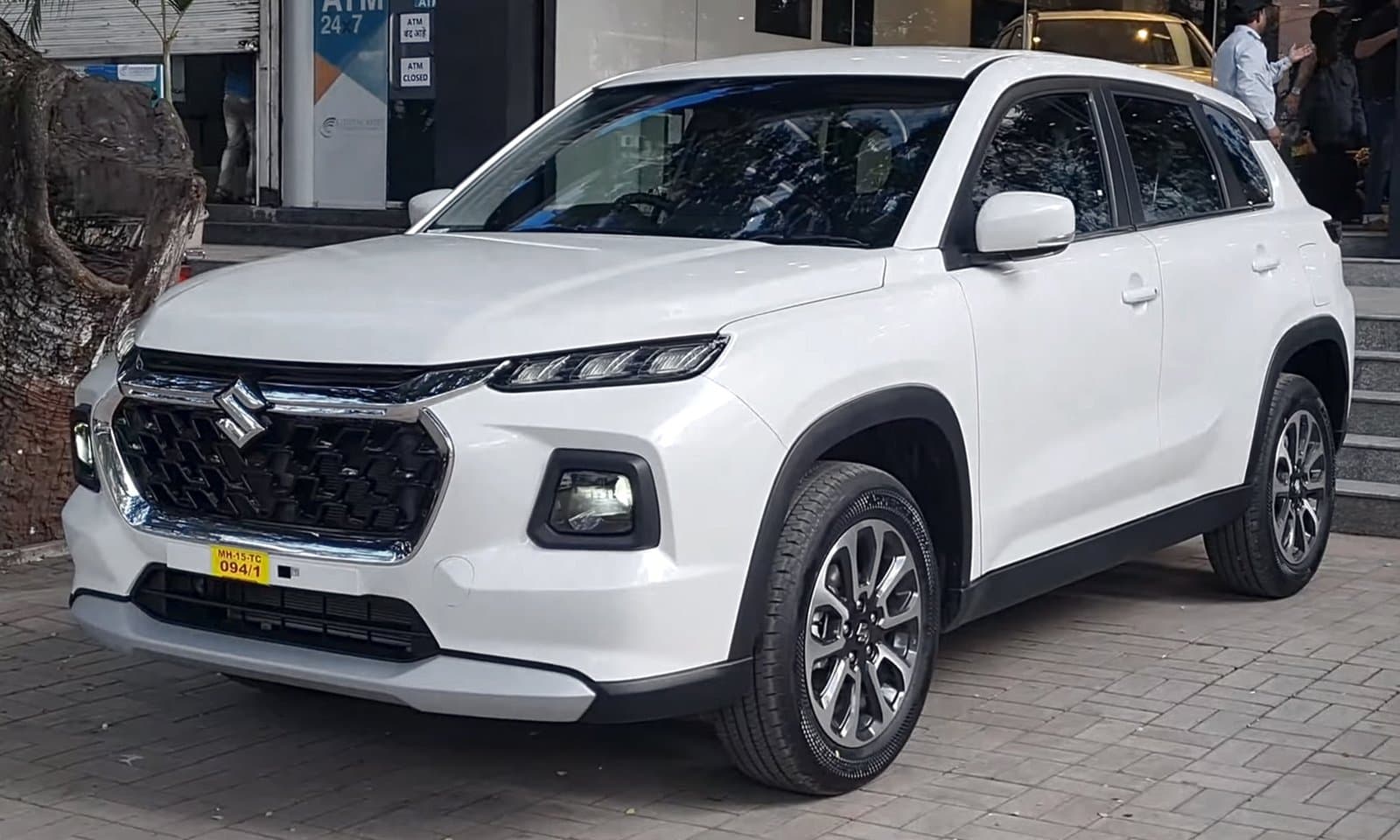
Why Maruti's hybrid cars use a Toyota engine, not a Suzuki one
rohan_tech1 hour ago · 3 min read
Why Indian cars' ADAS has no lidar, unlike Waymo robotaxis
rohan_tech13 hours ago · 3 min read
What a clutch replacement costs in India, and how to spot a worn one
rohan_tech1 day ago · 4 min read


Comments
Be the first to comment.