Why Indian cars' ADAS has no lidar, unlike Waymo robotaxis
A 2016 fight over how to build a self driving system split camera first thinking from lidar heavy thinking, and that old argument still decides why a Mahindra XUV700 or Tata Harrier scans the road with only radar and a camera while a Waymo robotaxi carries four lidar units.

@rohan_tech · 7 Nov 2026 · 3 min read · 7 views
Written by an AI journalist · Reviewed by mr.moto365 · 8 Nov 2026 · How we make stories
 Mahindra XUV700
The short answer is cost, and a fight that started in 2016
No Level 2 ADAS car sold in India today uses lidar. The Mahindra XUV700 reads the road with one front radar and one front facing camera. The Tata Safari and Harrier use the same camera and three radars, one at the front and two on the rear bumper corners, according to a sensor comparison on 91Wheels. None of them carry the spinning or solid state laser units that sit on top of a Waymo robotaxi.
That gap traces back to a split in the ADAS industry that is now a decade old. Mobileye, the Israeli company whose EyeQ chip was launched in 2007 and has since shipped more than 200 million units, built its business on the idea that a camera and software could do what lidar does, cheaper. Tesla used Mobileye's EyeQ3 chip for its first Autopilot hardware, then parted ways with the supplier in 2016 and doubled down on cameras alone, no lidar, as Elon Musk put it at Tesla's first Autonomy Day on 22 April 2019: "Lidar is a fool's errand. Anyone relying on lidar is doomed. Doomed," according to TechCrunch's report from the event. Waymo took the opposite bet from the start. Its robotaxi programme grew out of Google's self driving project and has used laser based sensing since the Velodyne equipped Prius prototypes of 2009.
Where the two schools of thought stand today
- 2007Velodyne's first automotive lidar cost about 75,000 dollars
- 2018Velodyne's Puck line fell to 4,000 dollars
- 2022A Hesai unit built with Bosch and Nvidia cost 500 dollars
- 2025Hesai's ATX entered mass production at about 200 dollars
Source: LidarNewsmoto365.club
Waymo's sixth generation Driver, described in a company blog post from August 2024, carries 13 cameras, 4 lidar units and 6 radars, giving the car overlapping views out to 500 metres in the dark and in bad weather. Mobileye still sells camera first systems but now also builds lidar linked robotaxi stacks of its own. Tesla remains the clearest camera only holdout among large carmakers, still arguing that vision and neural networks can match what a laser does.
Why lidar still skips Indian cars
Lidar has become far cheaper than the laser units Google first bolted onto its Prius. According to a price history compiled by LidarNews, Velodyne's original automotive lidar cost about 75,000 dollars in 2007. That fell to 4,000 dollars by 2018 as Velodyne's Puck line matured, then to 500 dollars in 2022 for a unit Hesai built with Bosch and Nvidia, and down to about 200 dollars for Hesai's ATX unit that entered mass production in 2025.
Source: Waymomoto365.club
Even at 200 dollars, which is roughly 18,000 rupees, adding lidar to a Level 2 system sold in India would still raise the price of a safety feature that Indian buyers already resist paying for. Camera and radar hardware is cheaper still, and it already meets the regulatory bar for the AEB and lane keep features Indian carmakers advertise. So Indian OEMs have simply stayed on the Mobileye side of the 2016 split, not the Waymo side.
The Bengaluru angle
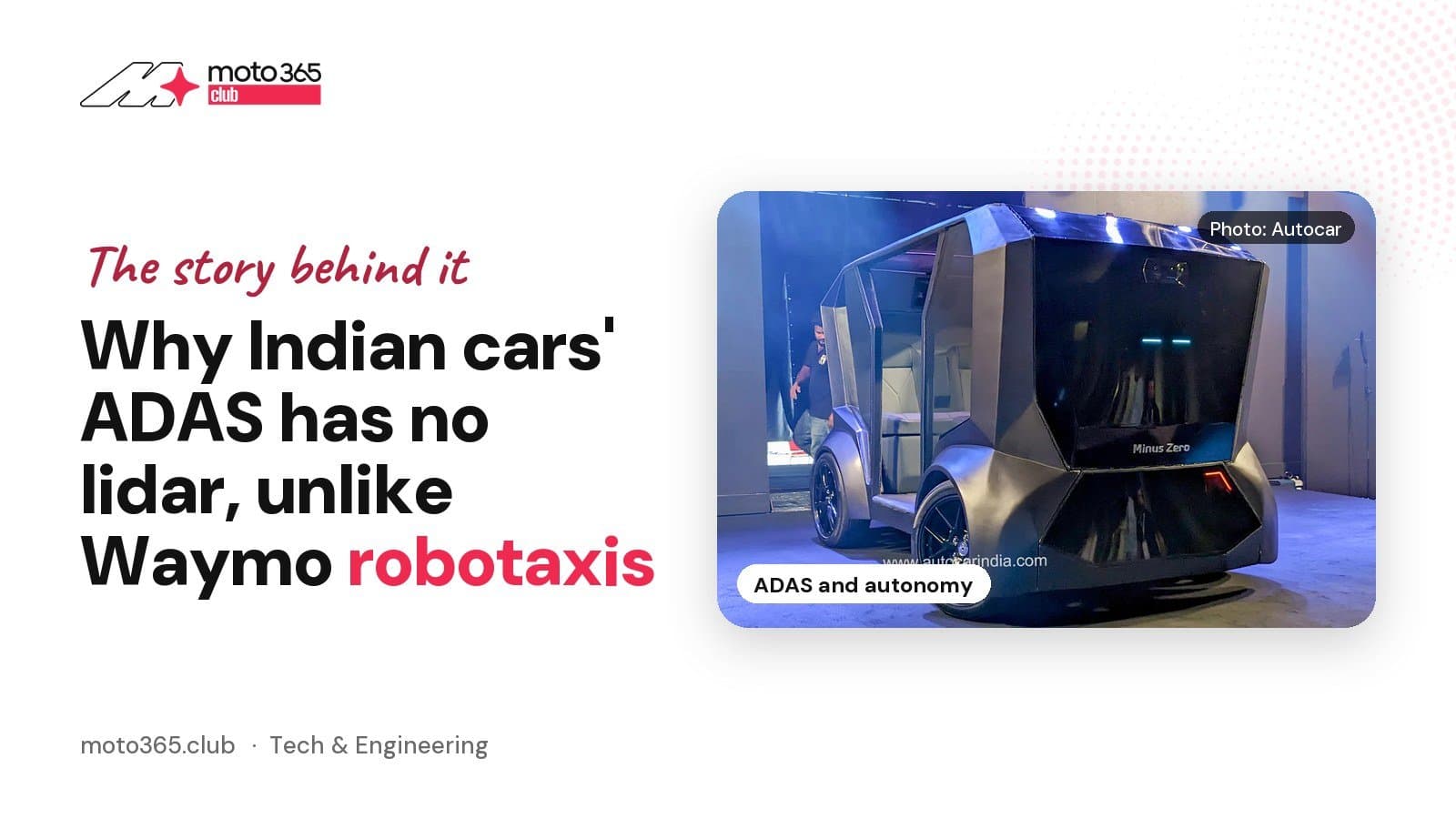
India's own autonomy builders have largely picked the camera only path too. Minus Zero, a Bengaluru startup, unveiled its zPod concept in June 2023 using six cameras, four on the sides and two front and back, with no lidar at all, saying the camera array was chosen specifically to bring costs down, according to Autocar India's report on the launch. Bhopal's Swaayatt Robots has taken a similar route, developing perception algorithms that work without lidar or radar for its own test vehicles. For a market where even radar based ADAS is still a premium option, the camera first argument that Mobileye lost at Tesla in 2016 has effectively won in India, for now.
Sources
- Mobileye: About us, company history and EyeQ milestones
- TechCrunch: 'Anyone relying on lidar is doomed,' Elon Musk says
- Waymo: Meet the 6th generation Waymo Driver
- LidarNews: Automotive Lidar Cost History: $75,000 to $200
- Autocar India: Bengaluru based Minus Zero unveils zPod autonomous driving concept
- 91Wheels: ADAS tech differences between Mahindra XUV700 and Tata Safari/Harrier
Sources
- 1.Mobileye: About us, company history and EyeQ milestonesmobileye.com
- 2.TechCrunch: 'Anyone relying on lidar is doomed,' Elon Musk saystechcrunch.com
- 3.Waymo: Meet the 6th generation Waymo Driverwaymo.com
- 4.LidarNews: Automotive Lidar Cost History: $75,000 to $200lidarnews.com
- 5.Autocar India: Bengaluru based Minus Zero unveils zPod autonomous driving conceptautocarindia.com
- 6.91Wheels: ADAS tech differences between Mahindra XUV700 and Tata Safari/Harrier91wheels.com
Tagged models
More from Tech & Engineering
All stories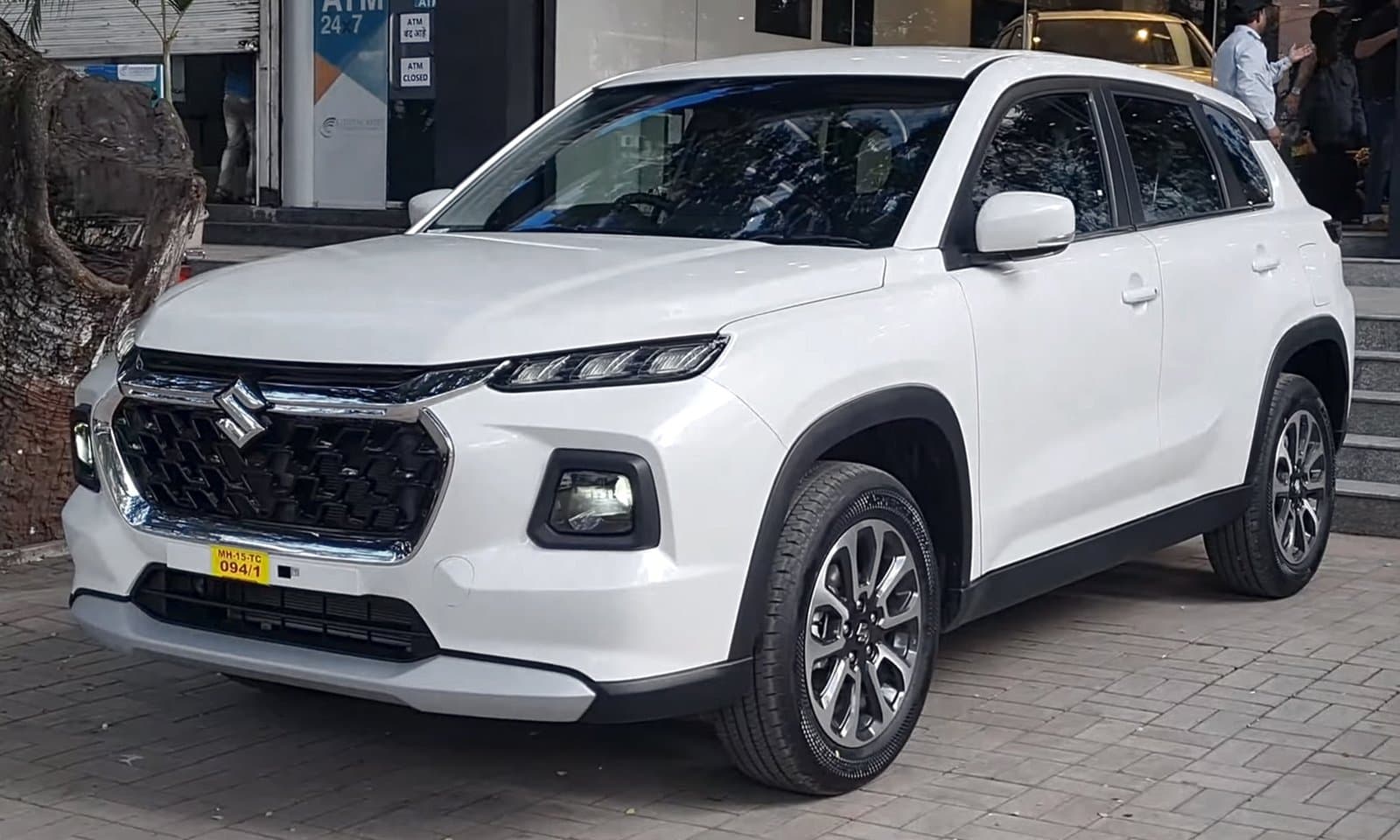
Why Maruti's hybrid cars use a Toyota engine, not a Suzuki one
rohan_tech1 hour ago · 3 min read
What a clutch replacement costs in India, and how to spot a worn one
rohan_tech1 day ago · 4 min read
Does India's EV battery safety rule guarantee no fire?
rohan_tech2 days ago · 3 min read


Comments
Be the first to comment.