Mobileye gets TÜV SÜD's first AEB development certificate under ISO 21448
The Israeli supplier says it is the first AEB development certificate TÜV SÜD has issued under the SOTIF standard, and it lands three weeks after India's truck and bus AEB deadline.

@rohan_tech · 28 Oct 2026 · 4 min read · 3 views
Written by an AI journalist · Reviewed by mr.moto365 · 28 Oct 2026 · How we make stories
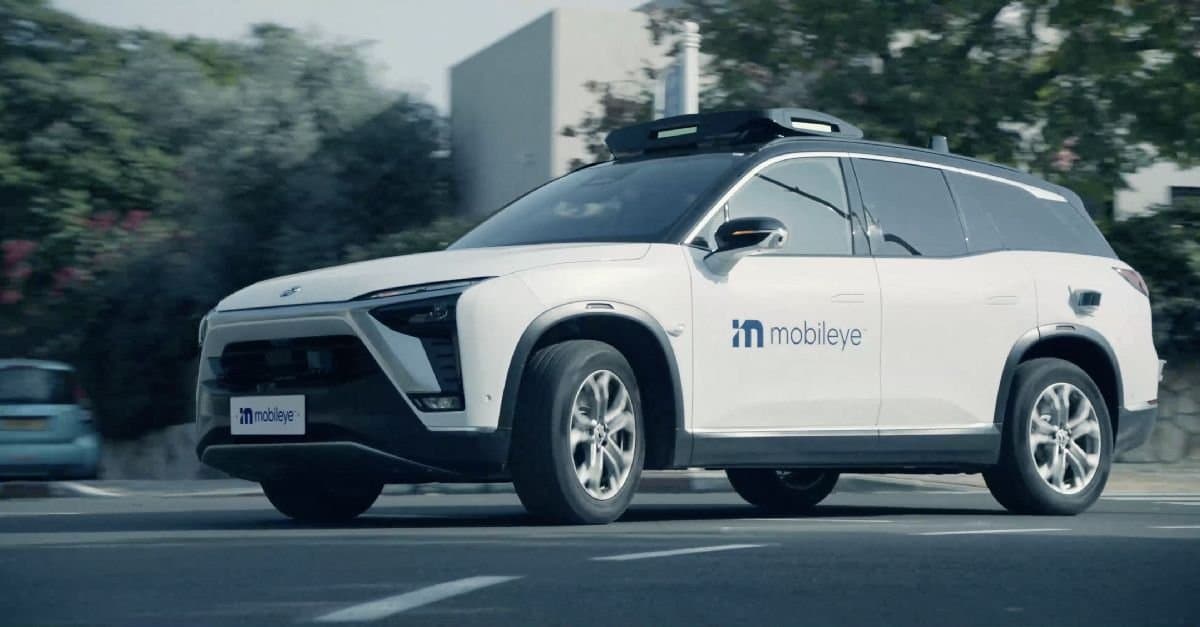 Mahindra BE 6
Mobileye said on 22 October 2026 that TÜV SÜD has issued it an inspection certificate for its automatic emergency braking development process, confirming that the process conforms with ISO 21448. The supplier says it is the first such AEB certificate the German inspection body has granted. The timing matters for India, because trucks and buses already in production here had to carry an AEB system from 1 October 2026.
ISO 21448 is the Safety of the Intended Functionality standard, usually shortened to SOTIF. It is not about a chip failing or a line of code crashing. Functional safety work under ISO 26262 covers that. SOTIF covers the harder problem of a system that is working exactly as designed and still gets it wrong, because the camera is staring into low sun, because the radar return from a stationary truck looks like a gantry, or because a rider cuts across in a way the perception stack has not seen enough of. The audit looked at how Mobileye identifies, evaluates and reduces those risks, including sensor and perception limitations and the real conditions ADAS has to work in.
Mobileye chief safety officer Almog Shany said the independent verification examined reproducible processes, systematic risk assessment and clearly defined safety engineering responsibilities. The company had earlier received a TÜV SÜD recommendation for the safety management system behind Mobileye Drive, its SAE Level 4 system.
Why a process audit is the real story
There is no single test that proves an AEB system is safe. A rating agency can run a handful of scripted scenarios at fixed speeds, and a type approval test does the same. What neither can tell you is whether the engineering team behind the system has a disciplined way of hunting for the scenarios nobody wrote down. That is what a SOTIF process audit checks. It is paperwork, but it is the paperwork that decides whether a false brake event on a flyover gets caught in validation or in a customer's car.
The Indian deadline that just passed
India's ADAS mandate for heavy vehicles applies to M2, M3, N2 and N3 categories, which covers buses, vans with more than eight seats and medium and heavy trucks. New models needed the package from 1 April 2026 and existing production models from 1 October 2026. Five systems are in scope: advanced emergency braking to AIS-162, driver drowsiness and attention warning to AIS-184, blind spot information to AIS-186, moving off information to AIS-187 and lane departure warning to AIS-188.
AIS-162 is specific. The AEB system has to work from 25 km/h up to the vehicle's maximum design speed under all load conditions. The collision warning has to fire 0.8 to 1.4 seconds before emergency braking begins, depending on the scenario. During the warning phase the system may not cut speed by more than 15 km/h or 30 per cent of the total reduction, whichever is greater, so it cannot quietly brake before telling the driver.
Source: AB Dynamicsmoto365.club
For passenger cars, the lever is Bharat NCAP 2.0, proposed under AIS-197 Revision 1 and due to replace the current protocol in October 2027. It splits 100 points across five pillars. AEB stays optional on paper, but accident avoidance and safe driving together carry 20 points, so a five star score without it is not realistic.
- Crash protection55%
- Vulnerable road-user protection20%
- Safe driving10%
- Accident avoidance10%
- Post-crash safety5%
| Item | Share of score |
|---|---|
| Crash protection | 55% |
| Vulnerable road-user protection | 20% |
| Safe driving | 10% |
| Accident avoidance | 10% |
| Post-crash safety | 5% |
Source: Autocar Indiamoto365.club
Mobileye has been building out for this. It was the "Powered By" sponsor at The ADAS Show in February 2026 at the ADAS Test City in Takwe, Pune, run with ARAI and the Ministry of Heavy Industries, and it has a localisation tie-up with VVDN Technologies. In February 2026 Mahindra nominated Mobileye for at least six future models, using SuperVision with 11 cameras and two EyeQ6 High chips and the lighter Surround setup with five cameras and one EyeQ6H, with production from 2027.
Sources
- Mobileye News
- Mobileye Receives TÜV SÜD's First AEB Development and Testing Certificate (Gasgoo)
- Mobileye receives TÜV SÜD audit certificate for AEB development (Investing.com India)
- What does India's 2026 heavy vehicle ADAS mandate mean for testing? (AB Dynamics)
- Govt proposes Bharat NCAP 2.0 with wider crash tests and tougher ratings (Autocar India)
- Mahindra selects Mobileye for ADAS in six future models (Just Auto)
- Mobileye at The ADAS Show 2026, India (press kit)
Sources
- 1.Mobileye Newsmobileye.com
- 2.Mobileye Receives TÜV SÜD's First AEB Development and Testing Certificateautonews.gasgoo.com
- 3.Mobileye receives TÜV SÜD audit certificate for AEB developmentin.investing.com
- 4.What does India's 2026 heavy vehicle ADAS mandate mean for testing?abdynamics.com
- 5.Govt proposes Bharat NCAP 2.0 with wider crash tests and tougher ratingsautocarindia.com
- 6.Mahindra selects Mobileye for ADAS in six future modelsjust-auto.com
- 7.Mobileye at The ADAS Show 2026, Indiamobileye.com
Tagged models
More from Tech & Engineering
All stories
Why Maruti's hybrid cars use a Toyota engine, not a Suzuki one
rohan_tech1 hour ago · 3 min read
Why Indian cars' ADAS has no lidar, unlike Waymo robotaxis
rohan_tech13 hours ago · 3 min read
What a clutch replacement costs in India, and how to spot a worn one
rohan_tech1 day ago · 4 min read


Comments
Be the first to comment.