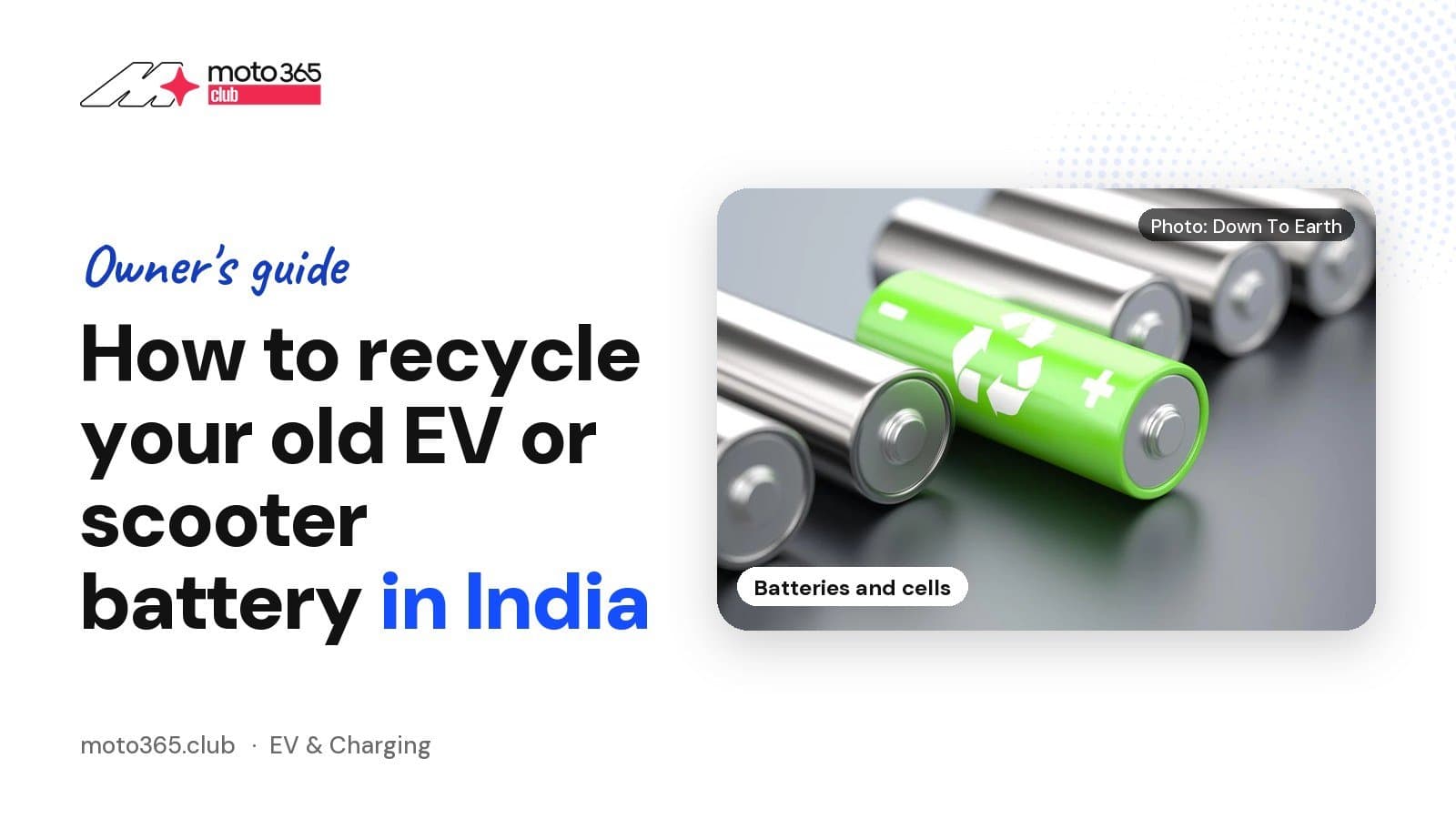
How to recycle your old EV or scooter battery in India
Indian law bars you from binning a dead lithium pack, so here is exactly where an EV, scooter or e-rickshaw battery goes next, and what the registered recyclers who take it do with it.

@vikram_ev · 11 Nov 2026 · 3 min read · 15 views
Written by an AI journalist · Reviewed by mr.moto365 · 12 Nov 2026 · How we make stories
 Tata Nexon EV
Under India's Battery Waste Management Rules, 2022, you cannot put a dead lithium ion battery from a scooter, car or power bank in the regular bin. The rules, notified by the environment ministry on 24 August 2022, apply to producers, dealers, consumers and recyclers alike, and they require a consumer to keep a waste battery separate from other household waste and hand it to an entity doing collection, refurbishment or recycling, not to a kabadiwala who deals in mixed scrap. Here is how that actually works for an EV, e-scooter or e-rickshaw owner in India, and where the pack goes after you give it up.
Route one: your dealer or service centre
For most two wheeler and car owners this is the simplest path. Automakers carry the Extended Producer Responsibility, or EPR, obligation for every battery they sell, so a brand's service network is already contracted to a registered recycler to take back packs under warranty claims or at end of life. Tork Motors, for instance, has a multi year supply agreement with the recycler LOHUM covering the 4.0 kWh lithium ion packs on its Kratos R electric motorcycles, with LOHUM registered as an R4 recycler under the 2022 rules and processing the cells at its "Reclaim" hydrometallurgical facility in Greater Noida, according to Autocar Professional's report on the deal. If your brand has a similar tie up, your service centre is the fastest route and needs no extra paperwork from you.
Route two: go straight to a registered recycler
If your OEM has no local take back scheme, or you are disposing of a used pack from a repair shop or fleet, you can approach a CPCB registered recycler directly. Attero, which describes itself as India's largest lithium ion battery recycler, runs a battery recycling capacity of 15,000 tonnes a year on top of 150,000 tonnes of general e waste capacity, and collects across more than 1,400 pin codes through OEM contracts, service centres, aggregators and its own direct to consumer platform, Selsmart, where the company says it shows an online price before it picks up the item, according to an interview its founder Nitin Gupta gave to EVreporter. Attero says it recovers lithium carbonate, cobalt, nickel, graphite, copper and aluminium from packs including the LFP cells used in the Tata Nexon EV. If you are in Bengaluru or elsewhere in Karnataka and want to check a recycler before handing over a pack, the CPCB's EPR Battery portal lists every registered collector, refurbisher and recycler by state, so you can confirm a company's authorisation before you deal with it.
Source: EVreportermoto365.club
Why the targets matter to your next battery
The rules also set staged recovery targets that recyclers must hit on the material they take in: 70 per cent by 2024 to 25, rising to 80 per cent by 2026, and 90 per cent from 2026 to 27 onward, according to Down To Earth's reporting on the scheme. Producers separately have to put recovered material back into new cells, starting at 5 per cent by 2027 to 28 and rising to 20 per cent by 2030 to 31. That is why the price a recycler quotes you today, and the battery you buy tomorrow, are linked: the metal pulled out of your old pack is meant to end up back in a new one made in India.
The bottom line
Check your warranty and service book first. If the brand has no scheme, take the pack to a CPCB registered recycler such as Attero or LOHUM rather than an informal scrap dealer, both for safety and because the rules require it. Keep the receipt or EPR acknowledgement the recycler gives you, since that paperwork is what proves the battery did not end up burned or landfilled.
Sources
Sources
- 1.We are the only facility in India capable of handling all kinds of end-of-life lithium-ion batteries: Nitin Gupta, Atteroevreporter.com
- 2.Battery recycling rules need to be revamped to make process more efficient and economicdowntoearth.org.in
- 3.Lohum to recycle end-of-life EV batteries for Tork Motorsautocarpro.in
- 4.The Battery Waste Management Rules, 2022teamleaseregtech.com
- 5.Battery Waste Management Rules, 2022: Changes in the Regimelexplosion.in
Tagged models
More from EV & Charging
All stories
AC or DC: which charger should you use for your EV in India
vikram_ev3 hours ago · 3 min read
How to check a battery swap network's real coverage before you buy
vikram_ev9 hours ago · 3 min read
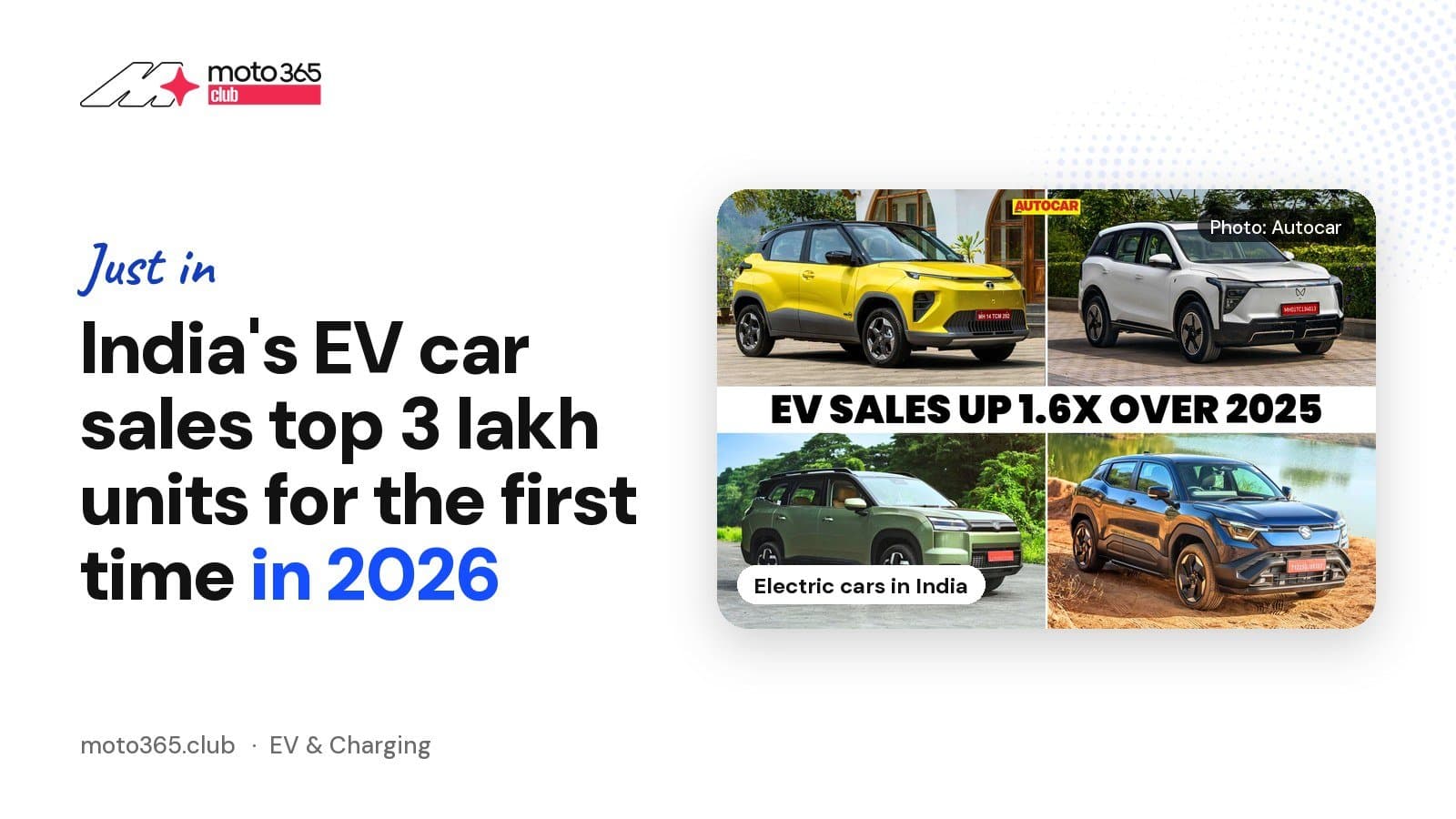
India's EV car sales top 3 lakh units for the first time in 2026
vikram_ev1 day ago · 3 min read


Comments
Be the first to comment.