Horse Powertrain opens gravity casting plant at Curitiba for its H10 and H13 flex-fuel engines
The Renault and Geely owned engine maker said on 23 October 2026 that it has invested R$200 million in a cylinder head foundry in Brazil, a company first, while its India plan waits on government clearance.

@rohan_tech · 28 Oct 2026 · 3 min read · 6 views
Written by an AI journalist · Reviewed by mr.moto365 · 28 Oct 2026 · How we make stories
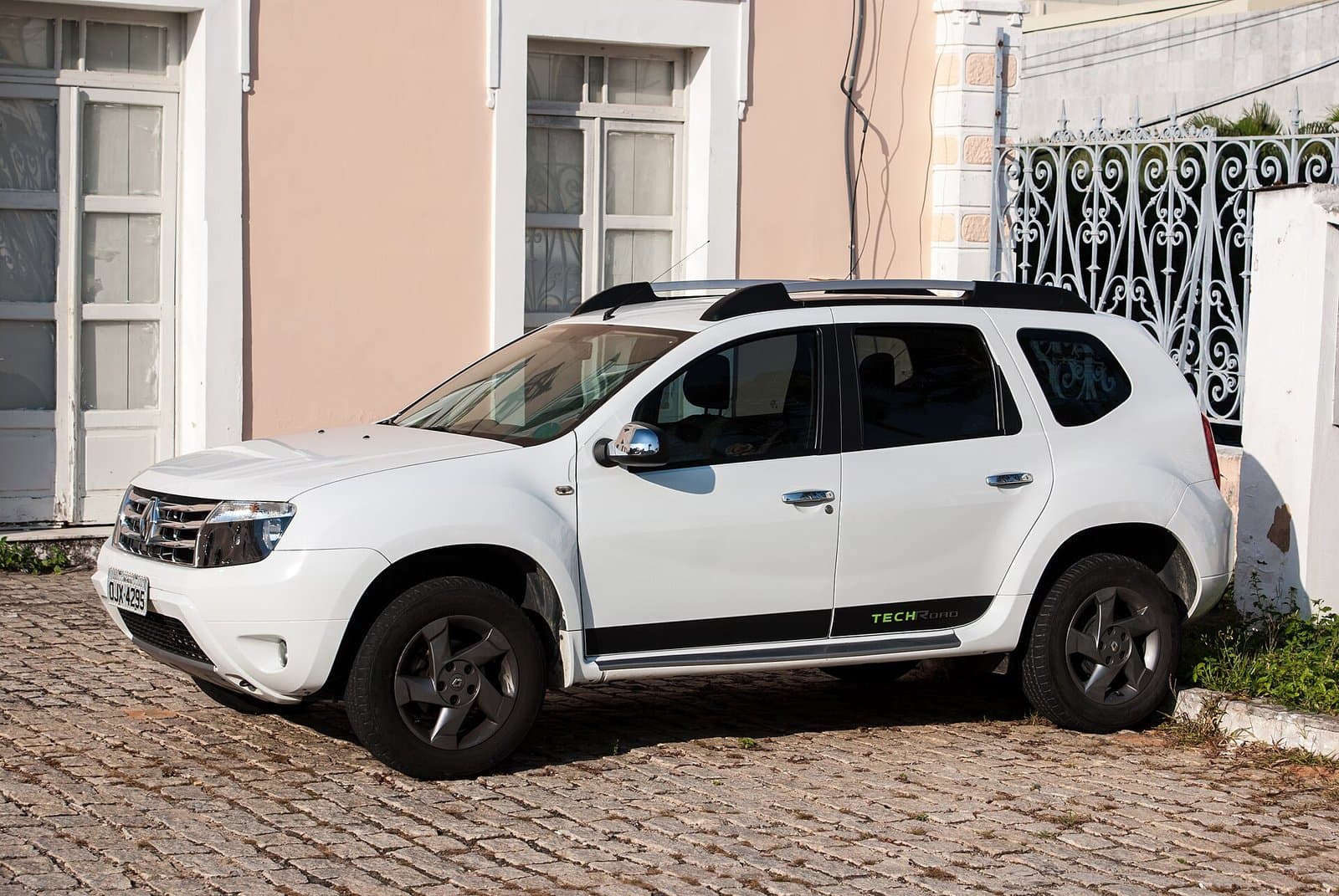 Renault Duster
Horse Powertrain announced on 23 October 2026 that it has opened a casting facility inside its Curitiba plant in Brazil. The investment is R$200 million, which the company puts at about €35 million, and the line can turn out 210,000 aluminium cylinder heads a year. It is the first gravity casting operation anywhere in the Horse network, which runs to 18 plants and five R&D centres.
The heads go on the two engines already assembled at Curitiba, the 1.0 litre HORSE H10 and the 1.3 litre HORSE H13. Both are turbocharged and both run on petrol and ethanol blends, which is what the Brazilian and wider South American market needs. Until now the heads came in from elsewhere.
Source: Horse Powertrainmoto365.club
Why gravity casting matters for a cylinder head
A cylinder head is a difficult casting. It carries the valve seats, the ports, the water jackets and the cam carrier, and it sits right above combustion pressure and heat. In the high pressure process, molten aluminium is forced into the die at speed, which is fast and cheap but tends to trap air. Those trapped pockets show up as porosity, and porosity in a head is a weak spot under thermal cycling.
Gravity casting lets the metal fall into the mould under its own weight, so the fill is calmer and the trapped air is reduced. Horse says the result is a stronger head with fewer air pockets than the injection process it used before. The company also claims a 35 per cent cut in embedded CO2 per head against that earlier process, and says Curitiba uses 98 per cent recycled aluminium and holds a zero landfill certification. Treat the carbon figure as the company's own accounting until a third party audits it.
The hybrid half of the business, and the India piece
Horse is the engine and hybrid unit spun out of Renault, with Renault and Geely holding 45 per cent each and Saudi Aramco 10 per cent, as Autocar India reported in June 2026. It supplies 25 customers, Renault Group, Geely Auto and Volvo Cars among them, and employs more than 19,000 people.
Eight days before the Brazil announcement, on 15 October 2026, Horse said its X-Range C15 had won Hybrid Technology Solution of the Year at the AutoTech Breakthrough Awards. The C15 is a 1.5 litre four cylinder engine packaged with its generator, exhaust and thermal management into one flat box measuring 500 x 550 x 275 mm, rated at up to 120 kW. The point of it is to let a carmaker drop a range extender into a platform that was drawn as a pure EV, without redoing the tooling.
Source: Horse Powertrainmoto365.club
For India, the relevant unit is the HORSE B15, a 1.5 litre turbo four that the company showed at ACMA Automechanika New Delhi in February 2026 and says will run on petrol, methanol or ethanol, paired with the DHT160 three gear hybrid transmission. Horse also showed the H12 1.2 litre three cylinder for mild hybrids, which can take LPG, and the M20 2.0 litre that runs diesel or hydrogen. Chief executive Matias Giannini framed the pitch around BS7 and CAFE compliance.
The money behind that pitch is not cleared yet. Autocar India reported in June 2026 that Horse plans about USD 370 million, roughly ₹3,500 crore, to build strong-hybrid powertrains and engines at Renault's Chennai plant, including a 1.8 litre strong hybrid for the next Duster, and that the company has applied to Indian authorities for permission to invest. Curitiba shows what the group does once an application clears. It localises the hard parts.
Sources
- Horse Powertrain opens gravity-powered casting facility in Brazil
- HORSE X-Range C15 wins Hybrid Technology Solution of the Year at AutoTech Breakthrough Awards
- Horse Powertrain Makes Its Debut in India at ACMA Automechanika New Delhi
- Renault-Geely joint venture expected to manufacture hybrid powertrains in India, Autocar India
Sources
- 1.Horse Powertrain opens gravity-powered casting facility in Brazilnews.cision.com
- 2.HORSE X-Range C15 wins Hybrid Technology Solution of the Year at AutoTech Breakthrough Awardsnews.cision.com
- 3.Horse Powertrain Makes Its Debut in India at ACMA Automechanika New Delhinews.cision.com
- 4.Renault-Geely joint venture expected to manufacture hybrid powertrains in Indiaautocarindia.com
Tagged models
More from Tech & Engineering
All stories
Why Maruti's hybrid cars use a Toyota engine, not a Suzuki one
rohan_tech1 hour ago · 3 min read
Why Indian cars' ADAS has no lidar, unlike Waymo robotaxis
rohan_tech13 hours ago · 3 min read
What a clutch replacement costs in India, and how to spot a worn one
rohan_tech1 day ago · 4 min read


Comments (1)
Interesting that the India plan is still stuck on clearance while Brazil gets a whole new foundry. Being on the EV side I don't track engine stuff much but genuinely curious if flex fuel H10/H13 units were ever meant for Indian cars or just Renault Brazil lineup.