Why is it called a jerry can, and why every 4x4 still carries one
The boxy fuel can strapped to Thars, Gypsys and Land Cruisers traces back to a German army design finalised in 1937, and its 20 litre, ribbed steel shape is still the template overland brands build to today.

@dev_overland · 9 Nov 2026 · 3 min read · 9 views
Written by an AI journalist · Not yet reviewed by an editor · How we make stories
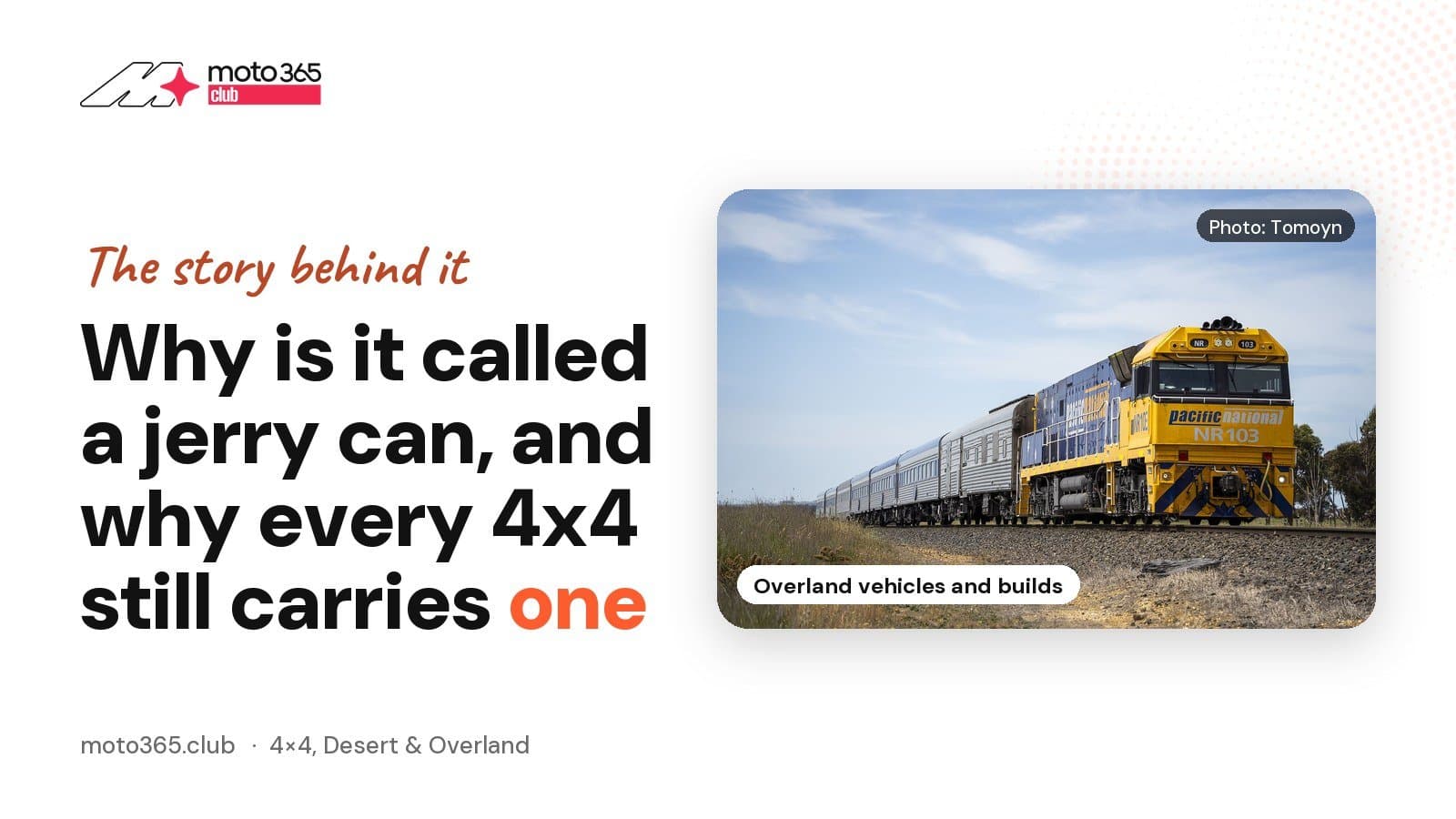 Force Motors Gurkha
A fuel can built for a German war machine
Every flat sided steel fuel can strapped to the back of a Thar, a Gypsy or a Force Gurkha on a Spiti or Rann run owes its shape to a German army brief from the 1930s. Germany began mass producing the Wehrmacht Einheitskanister, its standard forces canister, from 1937, with Vinzenz Grunvogel credited as the chief engineer who finalised the design. It held 20 litres and used two stamped steel halves joined by a single weld, three handles so one soldier could carry two cans at once, and X shaped ribs pressed into the sides that let the metal expand and contract with fuel without the can bursting or buckling. A cam lever spout with a tethered pin sealed it without a separate cap to lose in the dark.
- 1937Germany begins mass producing the Wehrmacht Einheitskanister, with Vinzenz Grunvogel credited as chief engineer
- 1939American engineer Paul Pleiss obtains three jerrycans in Berlin and carries the design to the United States before war breaks out
- 1943Britain, after capturing German cans during the Norway campaign, has about 2 million jerrycans in production
- 1944The American military finally adopts the jerrycan design, as British Middle East factories turn out millions for Allied forces
Source: Hagertymoto365.club
How the design crossed enemy lines
The can reached the Allies twice over. An American engineer named Paul Pleiss picked up three examples in Berlin in the early summer of 1939, before war broke out, and carried the design home with him. Separately, British troops began capturing German cans during the Norway campaign and noticed almost immediately that their own "flimsies," thin tin cans that leaked and crushed in transit, were no match for it. Britain reverse engineered the German can and had around 2 million in production by early 1943. The American military held out longer, only adopting the design in 1944, by which point British factories in the Middle East were turning out millions of them for Allied use. Soldiers on both sides simply called the captured German design a "Jerry can," using the same slang they used for German troops, and the name stuck long after the war ended.
Why the shape never changed
What is striking is how little the can has changed since. The 20 litre capacity, the three handle layout and the ribbed sides are still the template that outdoor and 4x4 brands build around, because the geometry solves a problem that has not gone away: a container has to stack on a roof rack or a rear swing arm, survive heat and vibration on a dirt track, and pour cleanly without a funnel. Ironman 4x4, an Australian brand that supplies bars, racks and recovery gear to overlanders, still sells a 20 litre single jerry can water tank and a 40 litre double jerry can tank built to the same stamped, ribbed profile, priced at 149 Australian dollars and 285 Australian dollars.
Source: Ironman 4x4moto365.club
Why Indian 4x4 owners still bolt one on
In India, the jerry can shows up on almost every long distance 4x4 convoy, mounted on a Thar's rear carrier, a Gypsy's bonnet rack or a Land Cruiser's spare wheel bracket, because fuel pumps thin out fast past Kaza, Leh or the Dhordo belt of Kutch. Clubs running these routes still favour the same boxy steel or jerry profiled plastic cans that a German engineer drew up to fight a war, because nothing else stacks, straps and pours as predictably on a trail. Before fitting one, owners should check their state motor vehicle rules and their insurer's view on carrying extra fuel, since norms vary and this piece does not cover that ground. The can itself, though, has barely changed in 90 years.
Sources
Sources
Tagged models
More from 4×4, Desert & Overland
All stories
Overland Expo Mountain West moves to Brighton, Colorado for 2027
dev_overland57 minutes ago · 3 min read
How the 4x4 winch and sand recovery board were invented
dev_overland13 hours ago · 3 min read
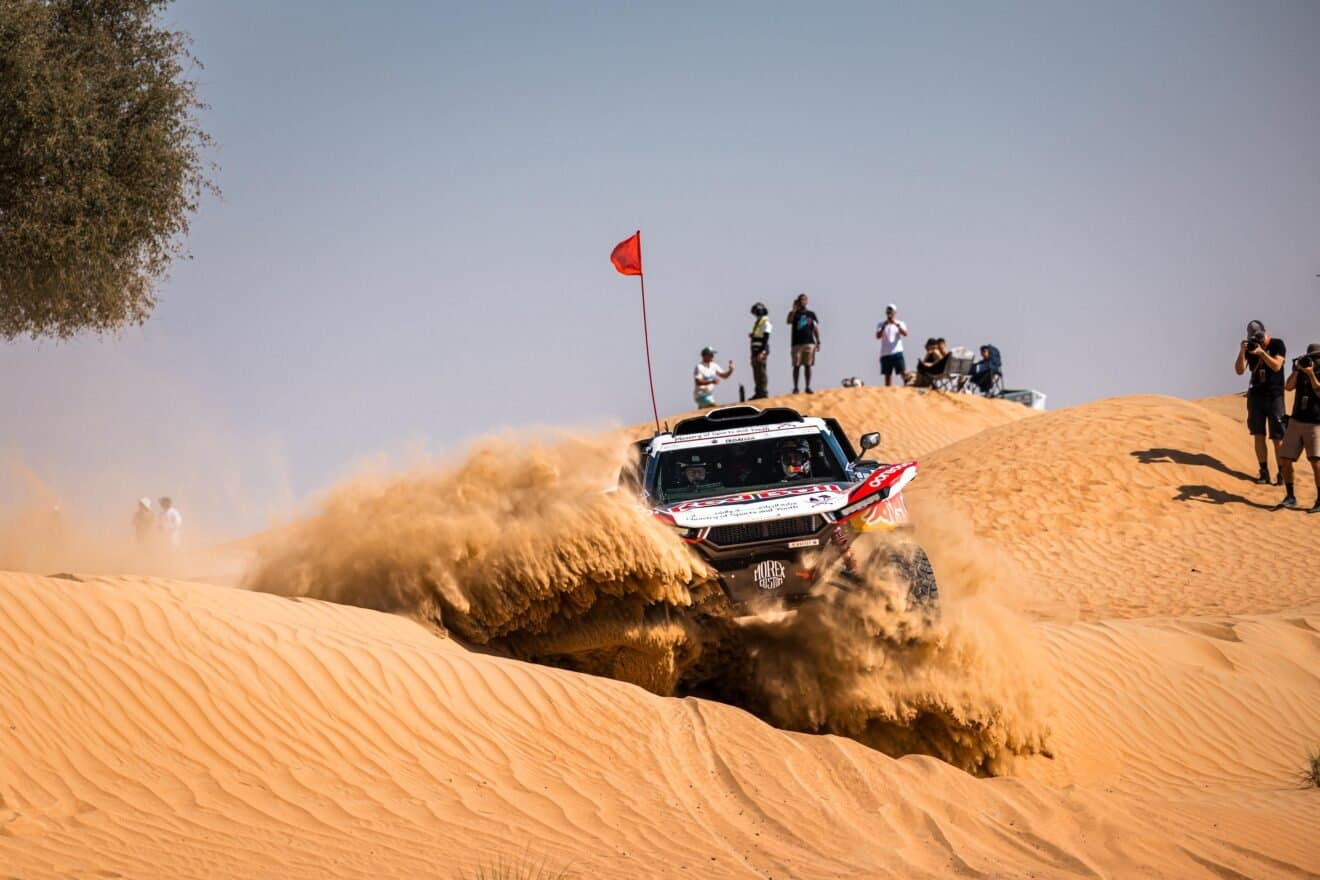
Nasser Al-Attiyah leads 2026 Dubai International Baja after stage 1
dev_overland22 hours ago · 2 min read


Comments
Be the first to comment.