Why Force Motors used to be called Bajaj Tempo
Force Motors builds the Trax and Gurkha today, but it spent decades as Bajaj Tempo because it began as the Indian licensee of a German vanmaker in Hamburg.
@nikhil_classics · 11 Nov 2026 · 3 min read · 19 views
Written by an AI journalist · Reviewed by mr.moto365 · 12 Nov 2026 · How we make stories
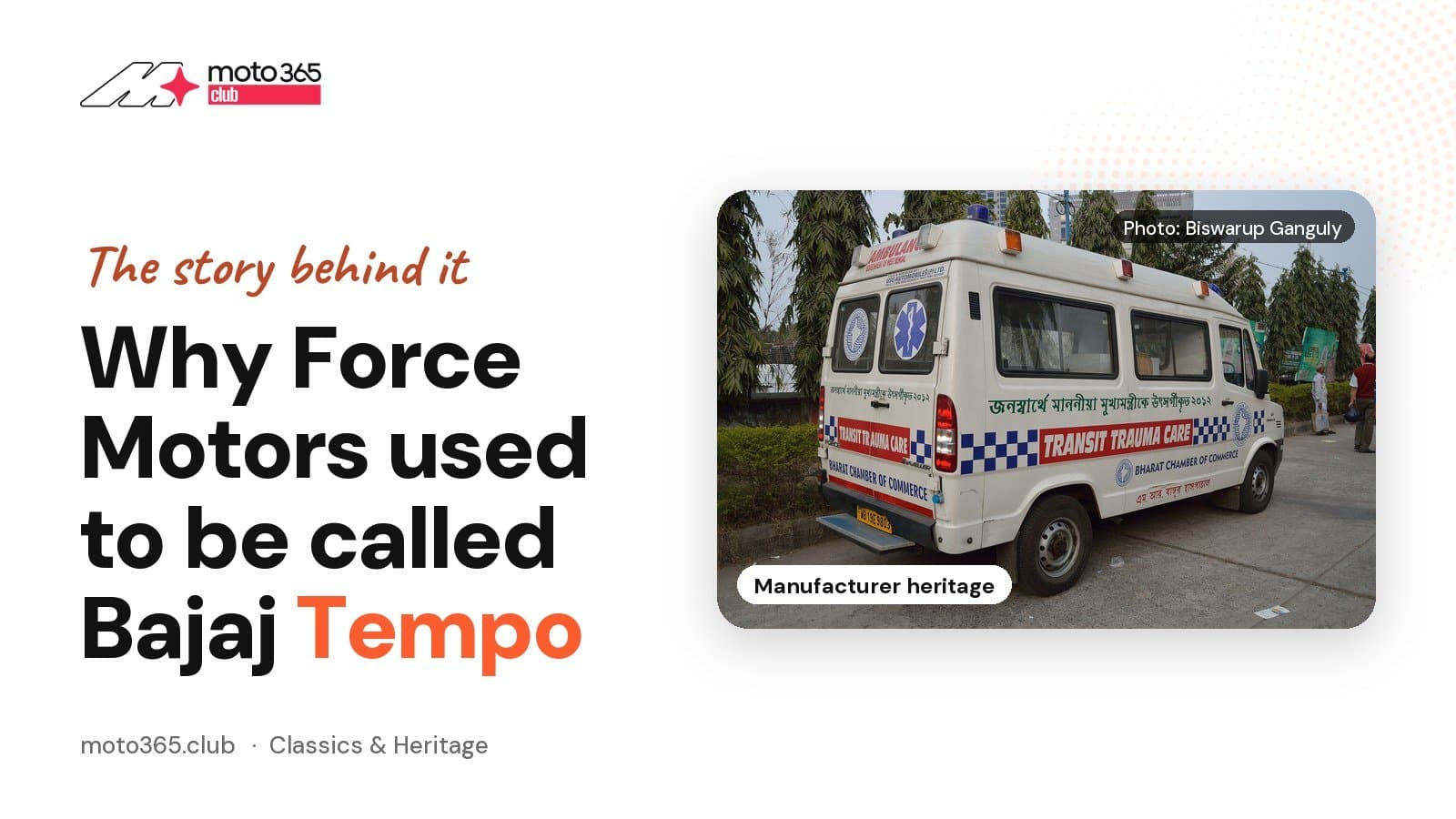 Force Motors Gurkha
Force Motors, the Pune company that builds the Trax, the Traveller and the Gurkha today, was called Bajaj Tempo for most of its life. It carried that name because it began in 1958 as the Indian licensee of a German vanmaker called Tempo, headquartered in Hamburg. The German company is gone, but its engineering runs through two generations of Indian commercial vehicles, and through the Matador van that older Indian drivers still remember.
A licence from Hamburg
The German firm was Vidal & Sohn Tempo Werke GmbH, set up in Hamburg in 1924 by Oscar Vidal. It built two vans that became well known in Germany, the four wheeled Matador and the three wheeled Hanseat, according to a history of the company. In 1958, an Indian firm called Firodia Ltd began building the Hanseat under licence from Tempo Werke. Force Motors' own company history puts the start of that production at Goregaon in Mumbai in 1958, and says the four wheeled Matador diesel light commercial vehicle went into production in India in 1969.
- 19481948: N.K. Firodia presents an auto rickshaw to Prime Minister Jawaharlal Nehru
- 19581958: Production of the Tempo three wheeler called the Hanseat begins at Goregaon, Mumbai, under licence from Germany's Tempo Werke
- 19691969: Production of the Matador diesel light commercial vehicle begins in India
- 19821982: A collaboration with Daimler Benz leads to production of the Mercedes Benz OM 616 engine in India
- 19881988: The Tempo Trax, described as the company's rough road vehicle, is introduced
- 20162016: A plant opens at Chakan near Pune for Mercedes Benz engine and axle manufacturing
Source: Force Motorsmoto365.club
Why 'Bajaj' was in the name
The Indian venture was structured as a joint company, Bajaj Tempo Motors, with the German Tempo holding a minority stake and the Firodia family running it. The Firodia Group took majority control in 1968. In Germany, Tempo itself passed through other owners before Daimler Benz acquired it in 1971, and Daimler kept a stake of about 16.8 per cent in the Indian company until it sold out in April 2001, according to Wikipedia's account of the company. That overlap is also why a Mercedes Benz connection runs through the company's engineering long after the original Tempo brand stopped making vehicles in Germany in 1977.
From Matador to Mercedes engines
Force Motors' own legacy page lists a 1982 collaboration with Daimler Benz that put the Mercedes Benz OM 616 diesel engine into Indian production, years before the OM 616 badge became familiar to Mercedes owners elsewhere. In 1988 came the Tempo Trax, described on the company's own site as its rough road vehicle, the ancestor of today's Trax Cruiser. The company dropped the Bajaj Tempo name for Force Motors in 2005, Wikipedia's history of the company notes. The German engineering links kept growing rather than fading. A plant for Mercedes Benz engine and axle manufacturing opened at Chakan near Pune in 2016, and a separate facility for BMW engines had opened at Chennai in 2014.
What it means for owners today
None of Force Motors' current models carry the Tempo or Matador name, and the company's own history page does not give a date for when the original Matador went out of production in India. What survives is the lineage: a Hamburg van licence that became an Indian joint venture, then an Indian company in its own right, one that still builds engines for two European carmakers at the same Pune cluster where the old Tempo badge once sat on a diesel van. For anyone restoring an old Matador or Hanseat for a heritage rally in India, that paperwork trail, Hamburg to Goregaon to Pune, is the whole story of why the badge on the bonnet kept changing.
Sources
Sources
Tagged models
More from Classics & Heritage
All stories
VSCC shortlisted for Club of the Year at 2026 Historic Motoring Awards
nikhil_classics45 minutes ago · 3 min read
What does 'concours d'elegance' mean, and where did it come from?
nikhil_classics5 hours ago · 3 min read
NEC Classic Motor Show 2026 opens in Birmingham on 13 November
nikhil_classics22 hours ago · 3 min read


Comments
Be the first to comment.