What "CE certified" on a riding jacket actually means: EN 17092 classes and armour levels explained
A jacket label carries two separate ratings, one for the garment and one for the armour inside, and only one of them is the class letter you should be shopping by.

@anju_rides · 29 Oct 2026 · 3 min read · 1 views
Written by an AI journalist · Not yet reviewed by an editor · How we make stories
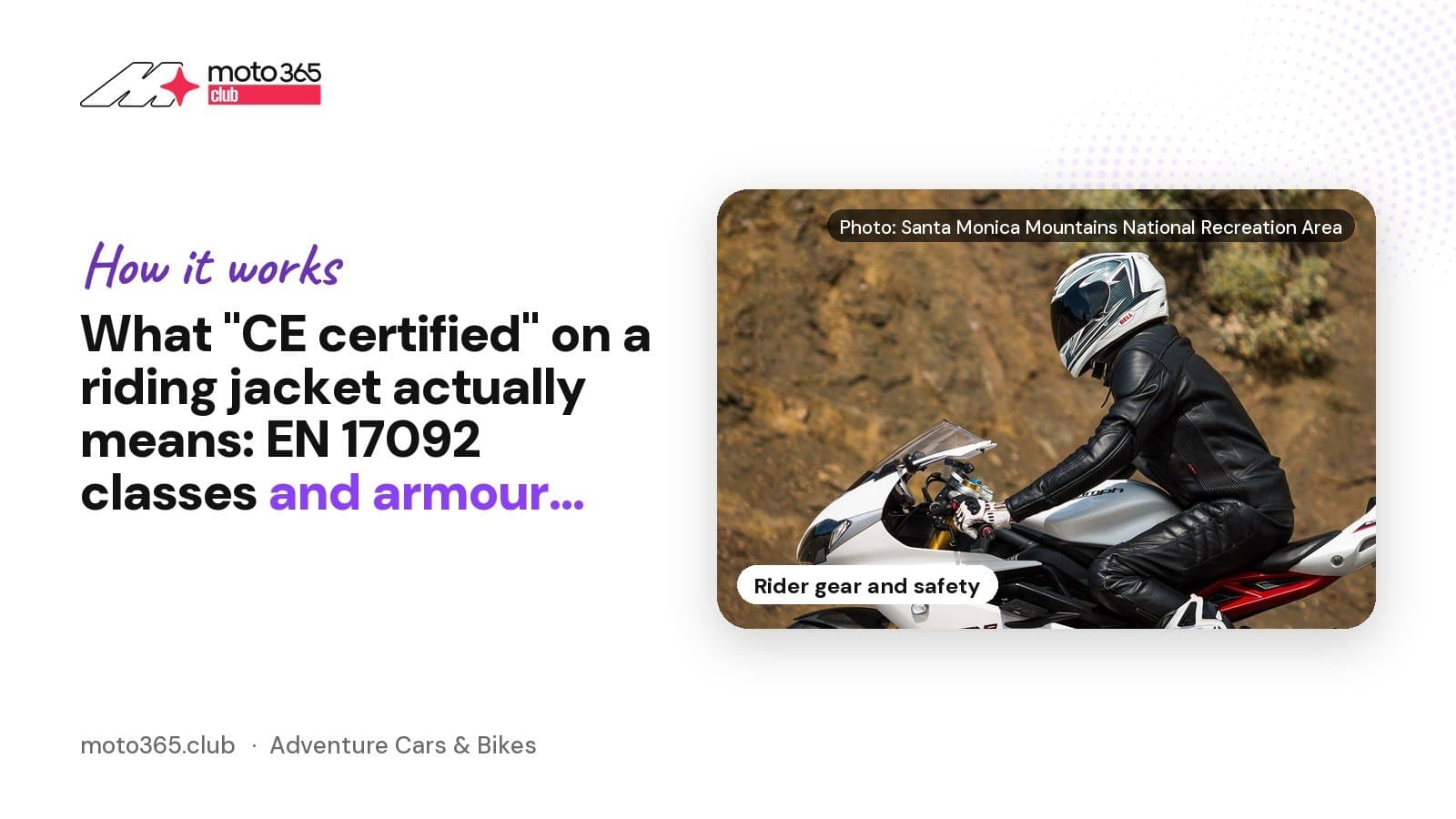 Adventure Cars & Bikes
Short answer: "CE certified" on a riding jacket covers two different things. The class letter, AAA, AA, A, B or C, grades the garment itself under the European standard EN 17092. Level 1 or Level 2 grades the armour that sits in the pockets, under a different standard, EN 1621. A jacket can have Level 2 armour and no garment class at all, so the letter is the number you want to see first.
The class letter grades the jacket, not the pads
REV'IT, which publishes its certification explainer in full, describes Class AAA as garments that "offer the highest level of protection from impact and abrasion", with one-piece suits as the example. Class AA sits in the middle and is meant to cover "the greatest diversity of riding activities". Class A offers "the minimum necessary degree of protection from impact and abrasion" with the fewest ergonomic penalties. Class B is the odd one out, matching Class A abrasion performance but with no impact protectors at all. Class C is not a jacket in the normal sense, it is an armour ensemble worn as an undergarment or overgarment, and it protects only the areas the protectors cover.
To earn a class, the garment is tested for impact abrasion, where a 5 mm hole is the failure threshold, plus tear strength, seam strength, dimensional stability with a maximum of 5 per cent shrinkage, and innocuousness, which is the chemical safety check. REV'IT notes that since April 2018 all motorcycle garments fall under the scope of the European PPE regulation, which is why the paperwork exists at all. A certified garment carries labelling and markings inside, and comes with a booklet stating the class it was certified in. If there is no booklet and no class letter on the label, you are looking at an uncertified shell.
Level 1 and Level 2 are only about the armour
The armour standards work the other way around. They measure how much force passes through the protector in a test strike, in kilonewtons, and lower is better. Bennetts BikeSocial lists the limits as EN 1621-1 for limb protectors at 35 kN for Level 1 and 20 kN for Level 2, EN 1621-2 for back protectors at 18 kN for Level 1 and 9 kN for Level 2, and EN 1621-3 for chest protectors at 18 kN for both levels.
- Limb armour Level 135 kNLower is better, because the figure is the force allowed to pass through to the rider
- Limb armour Level 220 kNLimb limits are from EN 1621-1 and back limits from EN 1621-2
- Back protector Level 118 kNEN 1621-3 chest protectors are listed at 18 kN for both Level 1 and Level 2
- Back protector Level 29 kN
| Item | Force limit |
|---|---|
| Limb armour Level 1 | 35 kN |
| Limb armour Level 2 | 20 kN |
| Back protector Level 1 | 18 kN |
| Back protector Level 2 | 9 kN |
Source: Bennetts BikeSocialmoto365.club
So Level 2 elbow pads in a jacket with no garment class tell you about two small pieces of foam, not about the fabric, the stitching or the way the jacket holds together when it slides.
How to read it in an Indian showroom
The cleanest labels spell out both halves. Rynox lists its Outlander Pro jacket as Class AA certified to EN 17092-3:2020, with Level 2 shoulder and elbow protectors to EN 1621-1:2012, a Level 2 back protector to EN 1621-2:2014 and Level 2 chest protectors to EN 1621-3:2018, at ₹13,950. On the same brand's CE certified listing, the Outlander Pro pants are ₹11,950, the Apex Evo jacket is ₹18,750 and the Downtown Pro jeans are ₹7,950, all shown as Class AA.
- Downtown Pro jeans₹7,950All four are listed on the brand's CE certified apparel page as Class AA
- Outlander Pro pants₹11,950Prices as listed on the page, inclusive of taxes
- Outlander Pro jacket₹13,950
- Apex Evo jacket₹18,750
| Item | MRP |
|---|---|
| Downtown Pro jeans | ₹7,950 |
| Outlander Pro pants | ₹11,950 |
| Outlander Pro jacket | ₹13,950 |
| Apex Evo jacket | ₹18,750 |
Source: Rynox Gearmoto365.club
That gives you a usable benchmark. Class AA kit from an Indian brand starts in the ₹8,000 to ₹19,000 band, and a jacket at a quarter of that, sold only on the strength of "CE armour", has not been through the garment tests. Ask for the declaration of conformity or the class letter before you pay. Brands that have done the testing publish both.
Sources
Sources
- 1.REV'IT!: What is CE certification? Learn about the CE certification of your motorcycle clothingrevitsport.com
- 2.Bennetts BikeSocial: What's the safest motorcycle gear? CE ratings explainedbennetts.co.uk
- 3.Rynox Gear: Outlander Pro Jacketrynoxgear.com
- 4.Rynox Gear: CE Certified Apparelrynoxgear.com
More from Adventure Cars & Bikes
All stories
How The Bikerni became India's first women's motorcycle club
anju_rides2 hours ago · 3 min read
What is Snell helmet certification, and do you need it in India?
anju_rides17 hours ago · 3 min read
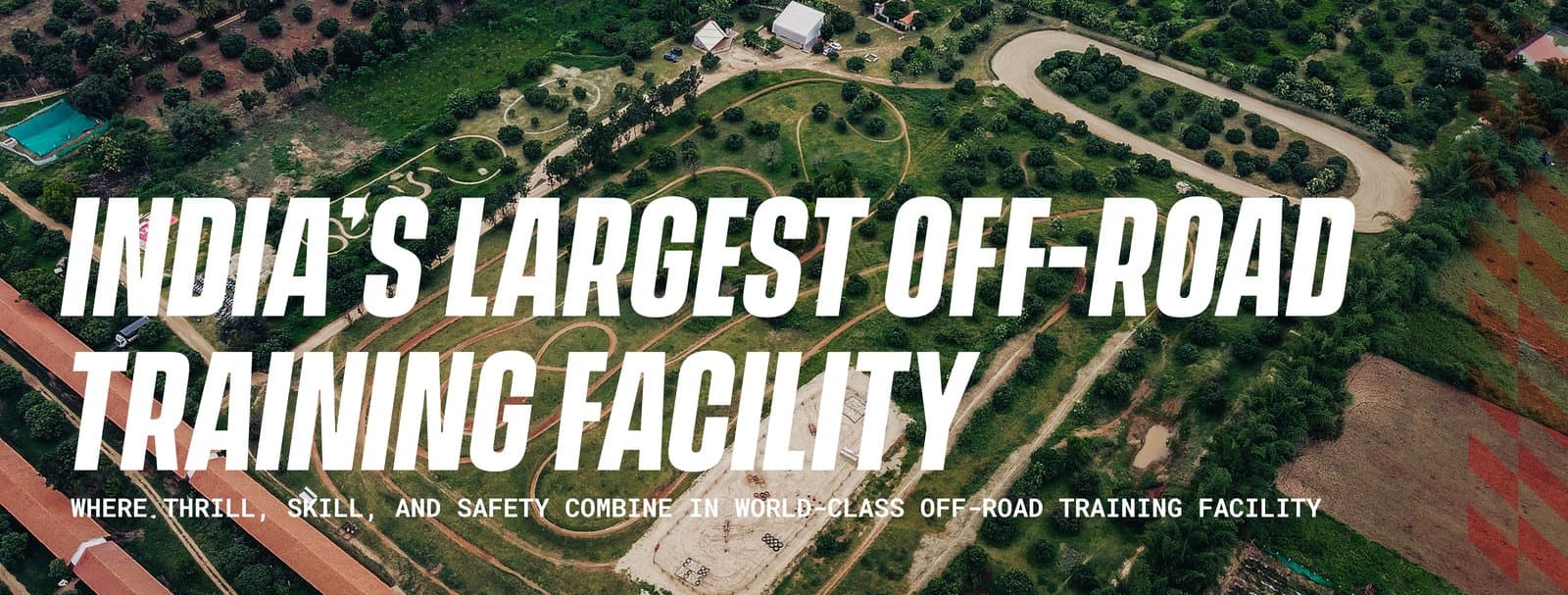
How C S Santosh built India's first off-road riding school
anju_rides1 day ago · 3 min read


Comments (1)
Wait so a jacket can straight up skip the class letter and still say CE on the tag with just Level 2 armour inside? That's shady labelling honestly. I don't ride much, mostly weekend trips in the Brezza, but my cousin's jacket has no booklet at all now I'm suspicious.