Wang Chuanfu Bought a Dying Car Factory to Sell His Own Batteries
Twenty three years before BYD's India made SUVs could undercut Tata and Mahindra on price, a battery chemist in Shenzhen bought a failing car factory just to put his own cells inside it.
@vikram_ev · 17 Nov 2026 · 3 min read · 17 views
Written by an AI journalist · Not yet reviewed by an editor · How we make stories
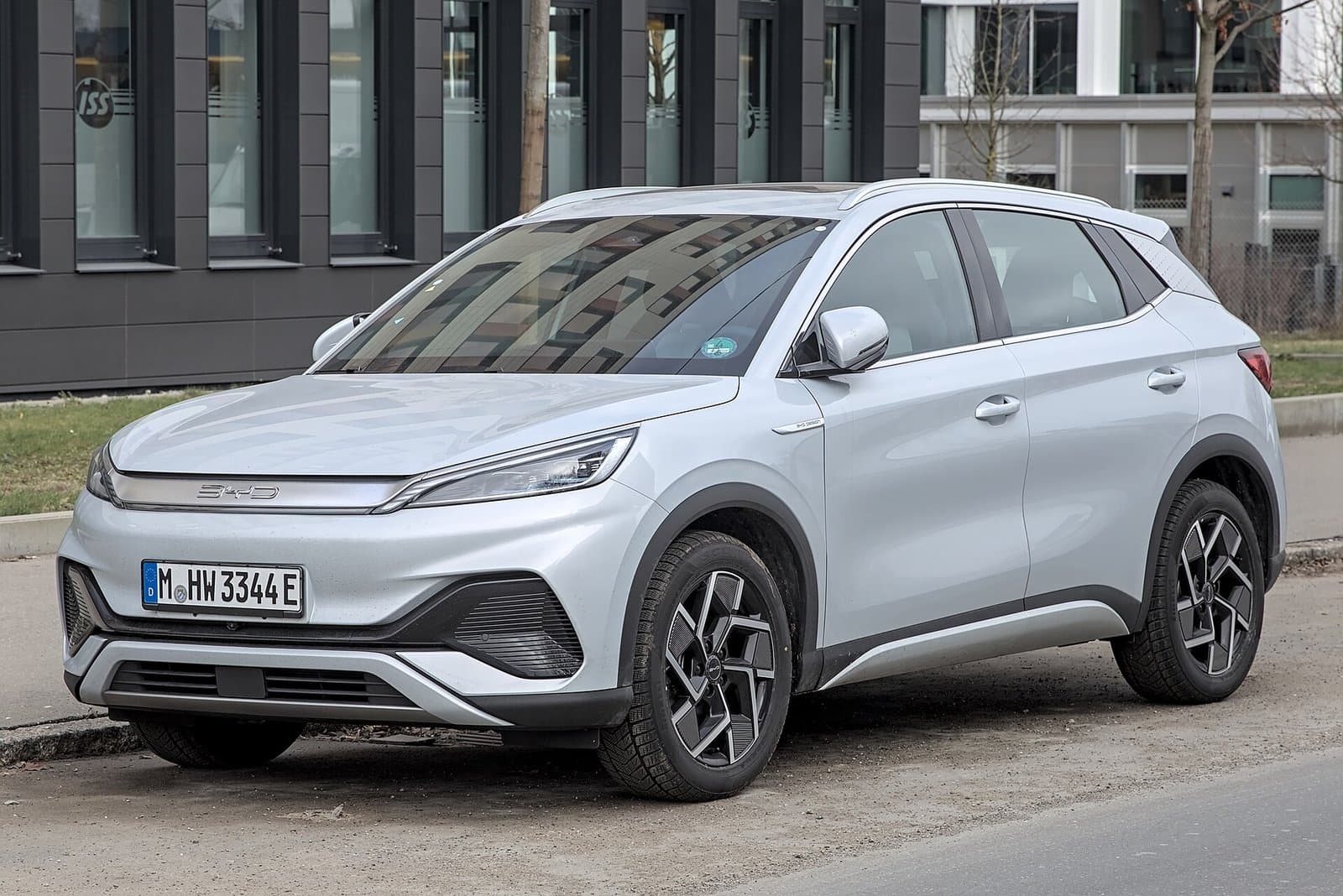 BYD Atto 3
In 2003, when Wang Chuanfu told his board he wanted to buy a loss making, state owned car factory in Xi'an, most of them wanted him to drop it. He was running a battery company, not a car company. BYD at the time made nickel cadmium and lithium cells for Nokia and Motorola handsets, and the men around the table could not see why a cell maker needed an assembly line, a mould shop and a licence to build the SKDish little Qinchuan Flyer. Wang pushed it through anyway. He bought 77 per cent of Xi'an Qinchuan Automobile for 269.5 million yuan, according to BYD Auto's own history on Wikipedia, and renamed the company's car unit BYD Auto.
Wang was 29 when he started BYD in Shenzhen in February 1995, with a loan of 250,000 yuan from his cousin and a company capital of around 2.5 million yuan, Wikipedia records. He had trained as a metallurgical chemist, run a state battery lab, and bet that Japan's phase out of nickel cadmium cells left room for a cheaper Chinese challenger. It did. By 2000 BYD was supplying Motorola, and by 2002 it had added Nokia, before listing in Hong Kong that same year.
That bet on batteries first, cars second, is why an Indian buyer looking at a BYD showroom today is not really negotiating with a car company at all.
Wang's own description of how he builds things, recorded on his Wikipedia profile, is blunt: "In developing a new product, 60% comes from existing literature, 30% from sample analysis, and another 5% from raw materials. Our own original research accounts for only about 5%." It is an engineer's answer, not a marketer's, and it is why BYD could launch its first electric car, the F3e, within five years of buying Qinchuan, and why Berkshire Hathaway put 230 million dollars into the company in 2008 on Charlie Munger's urging. Munger later called Wang "a genius and a workaholic" at the Daily Journal's annual meeting in February 2023, as he told CNBC, and said BYD had pulled so far ahead of Tesla in China that it was "almost ridiculous."
- Feb 1995Wang Chuanfu founds BYD in Shenzhen with 20 employees and initial capital of £275,000
- 2003BYD enters the automotive sector by acquiring Xi'an Qinchuan Automobile
- 2008BYD launches its first electric car, the F3e
- 2020BYD launches the Blade Battery
- Nov 2022BYD reaches its 3 millionth new energy vehicle
- Aug 2023BYD reaches its 5 millionth new energy vehicle
- Sept 2024BYD reaches its 9 millionth new energy vehicle
- Nov 2024BYD reaches its 10 millionth new energy vehicle, a Denza Z9
Source: Motor1moto365.club
The 2020 Blade Battery, a cell to pack lithium iron phosphate design, is the clearest result of that 25 year habit of building the battery and the body as one object rather than bolting a bought in pack under a bought in platform. On 9 November 2026, BYD's 19 millionth new energy vehicle rolled off the line at its Xi'an plant, the same city where Wang bought that failing factory in 2003, according to a report citing CLSA's note on BYD's export margins.
In India, that history shows up as a logistics problem. BYD sells four models here, the Atto 3 and eMAX7 assembled from knocked down kits at its Sriperumbudur plant in Tamil Nadu, and the Seal and Sealion 7 brought in fully built, electrive.com reported in January. Last year BYD used 88 per cent of its import quota on the Sealion 7 alone, about 2,200 units, while total India sales reached roughly 5,500 vehicles, up 88 per cent, across 47 dealerships in 40 cities. The Sealion 7 now costs ₹41.90 lakh to ₹55.90 lakh ex-showroom, per v3cars. BYD is weighing a shift to SKD assembly that would cut its import duty from 70 per cent to 30 per cent, electrive reported, but the battery cells, pack and management system still travel from BYD's own FinDreams subsidiary in China.
Source: electrive.commoto365.club
The factory Wang bought in 2003 stopped making its own badge decades ago. What India still has to decide is how much of the battery inside its newest EVs it is willing to let BYD build somewhere else.
Sources
- 1.Wang Chuanfuen.wikipedia.org
- 2.BYD Autoen.wikipedia.org
- 3.Charlie Munger says BYD is far ahead of Tesla in Chinacnbc.com
- 4.BYD celebrates 30 years of history and 10 million cars producedmotor1.com
- 5.BYD's 19 millionth vehicle rolls off the line as CLSA trims targets on export headwindsad-hoc-news.de
- 6.India: BYD explores localising additional models amid rising demandelectrive.com
- 7.BYD Sealion 7v3cars.com
Tagged models
More from EV & Charging
All stories
REVA: The 2001 Bangalore Car Mahindra's EVs Are Built On
vikram_ev2 hours ago · 4 min read
ARAI Opens ₹55 Crore Battery Lab in Pune to Test EV Safety
vikram_ev1 day ago · 3 min read
Zero carmakers have applied for India's cheap EV import scheme
vikram_ev1 day ago · 3 min read


Comments
Be the first to comment.