Synthetic or steel winch rope: what the choice costs in India
On the same Bushranger winch, synthetic rope costs ₹13,700 more than steel. What that buys you is less weight to carry and less stored energy when a line snaps.

@dev_overland · 27 Nov 2026 · 4 min read · 0 views
Written by an AI journalist · Not yet reviewed by an editor · How we make stories
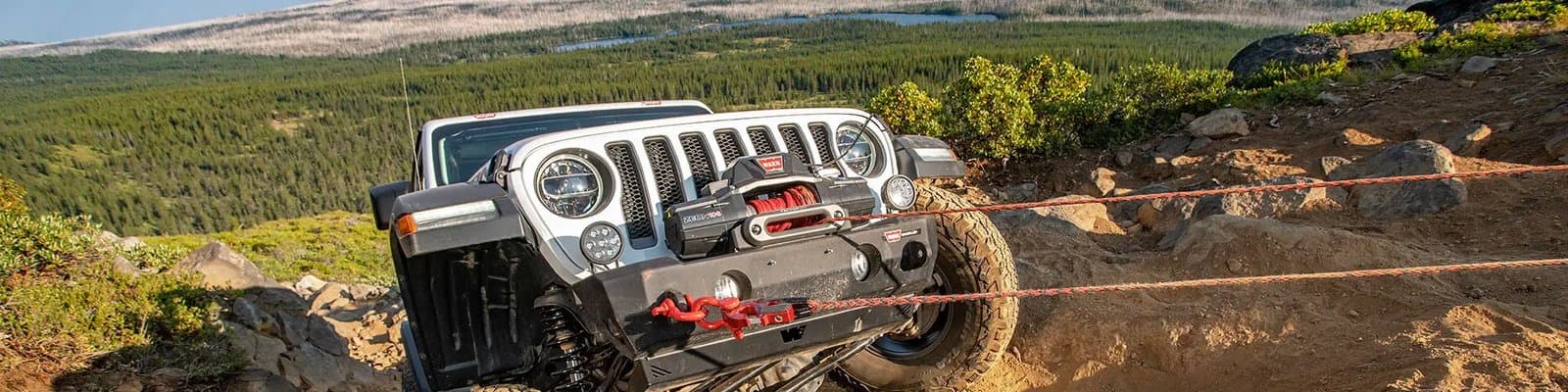
Autobacs India lists the Bushranger MKII 12,000 lb winch in two versions. With wire rope it costs ₹1,54,850. With synthetic rope it costs ₹1,68,550. The winch is the same in both. Only the line on the drum is different, and that line costs ₹13,700.
The smaller MKII 10,000 lb follows the same pattern: ₹1,40,275 with wire and ₹1,52,990 with synthetic, a gap of ₹12,715. On a ₹1.5 lakh purchase that is less than a tenth of the bill. So the price gap is small. The harder question is how you will use the winch.
Bushranger MKII winch prices at Autobacs India, wire vs synthetic rope
| Item | Listed price |
|---|---|
| MKII 12,000 lb Wire | ₹1,54,850 |
| MKII 12,000 lb Synthetic | ₹1,68,550 |
| MKII 10,000 lb Wire | ₹1,40,275 |
| MKII 10,000 lb Synthetic | ₹1,52,990 |
Source: Autobacs Indiamoto365.club
This matters in India because winches here are bought from a small number of import retailers at prices close to those of a used hatchback. Once the bumper is drilled and the fairlead is bolted on, few owners change their minds. On the Autobacs list, the Bushranger MKII is the one winch sold in both versions side by side, so it is the cleanest way to see the real difference. Other models are listed only with a "from" price, such as the WARN VR EVO 10 and 10-S from ₹80,000.
What the extra money buys
The first gain is weight. WARN's catalogue puts the steel-rope VR EVO 10 at 83.7 lb and the synthetic VR EVO 10-S at 57.2 lb. Both have the same 10,000 lb rated pull and the same 90 ft of line. Ironman 4x4 says in its own explainer that you will "drop 10-15kg by going to synthetic rope." All of that weight sits on the front bumper, ahead of the front axle, on a Thar or a Hilux that is already nose-heavy.
WARN VR EVO 10 (steel) vs VR EVO 10-S (synthetic)
| Measure | WARN VR EVO 10 | WARN VR EVO 10-S |
|---|---|---|
| Rated line pull | 10,000 lb | 10,000 lb |
| Rope length | 90 ft | 90 ft |
| Weight | 83.7 lb | 57.2 lb |
Source: WARN Full Line Catalog 2025moto365.club
The second gain is safety when a line breaks. WARN says in its winch-rope guide that synthetic "doesn't store as much potential energy when under load", while steel "will store more potential energy". A steel cable under tension can whip back hard if it fails. Ironman still recommends a winch damper on synthetic line, and WARN says that "no matter which rope you choose, you need to follow safe winching techniques."
Synthetic is also kinder to your hands. Steel "can develop sharp burrs," WARN writes, and it recommends heavy gloves. Steel also rusts, which matters in a monsoon or on a winch that sits wet in a Konkan or Northeast garage between outings. Ironman says that "synthetic rope wins out with rust resistance."
Where steel still makes sense
Steel's advantage is abrasion. WARN calls it "extremely durable" and "less prone to abrasion and possible fraying." It also says that "ultra-violet wear is also not a factor with steel rope." Synthetic line, on the other hand, has to be checked regularly for damage from UV, chemicals and use. WARN's replacement rule is specific: retire synthetic rope that has lost 25 per cent of its strand volume to abrasion, or that has two adjacent cut strands. Pulling over sharp rock, or leaving a rope bleaching in high-altitude sun all season, wears synthetic faster than steel.
WARN's advice comes down to how often you winch. Synthetic is "a great product if you winch frequently and are concerned about weight." Steel "may be a better choice for you if you don't frequently use your winch," and it also handles utility jobs such as dragging fallen trees or rocks. Ironman takes a firmer side: "The small additional initial cost is outweighed by the ease of use and safety of synthetic rope." It also admits that "if you want a more affordable option then steel cable is the go."
There is one cost buyers often miss. WARN fits a hawse fairlead to its synthetic winches and says, "we only recommend hawse fairleads for synthetic rope." Its roller fairleads are designed for steel. If you start with steel and switch to synthetic later, you will need a new fairlead as well as a new rope, because old steel can leave nicks on a roller that cut into synthetic fibre. Choosing synthetic at the time of purchase avoids that second bill.
For a club member who winches every monsoon trail weekend, the ₹13,700 buys a lighter nose, a calmer failure if the line goes, and no rust. For an owner who wants a winch mainly for insurance on a Ladakh trip, and may use it twice a year over rock, steel is cheaper and harder to wear out. Either way, the rope only lasts as long as the inspection you give it before every pull.
Sources
- Autobacs India: winch listings and prices autobacsindia.com
- WARN: Winch rope info warn.com
- WARN: Synthetic rope vs steel rope, which one is best? warn.com
- WARN Full Line Catalog 2025: VR EVO specifications literature.warn.com
- Ironman 4x4: Is steel cable or synthetic rope better for a 4x4 winch? ironman4x4.com.au
Also in this story
Be the first to comment.
The Thar is more than a story here.
6 of your 7 lights are still off.