Overland Hilux fixes that held: a $5 key, a soap-sealed fuel tank
A dual battery on three weak mounts tore a hydraulic pipe in Africa, and a roughly $5 part revived a stalled Suzuki: what overlanders say held.
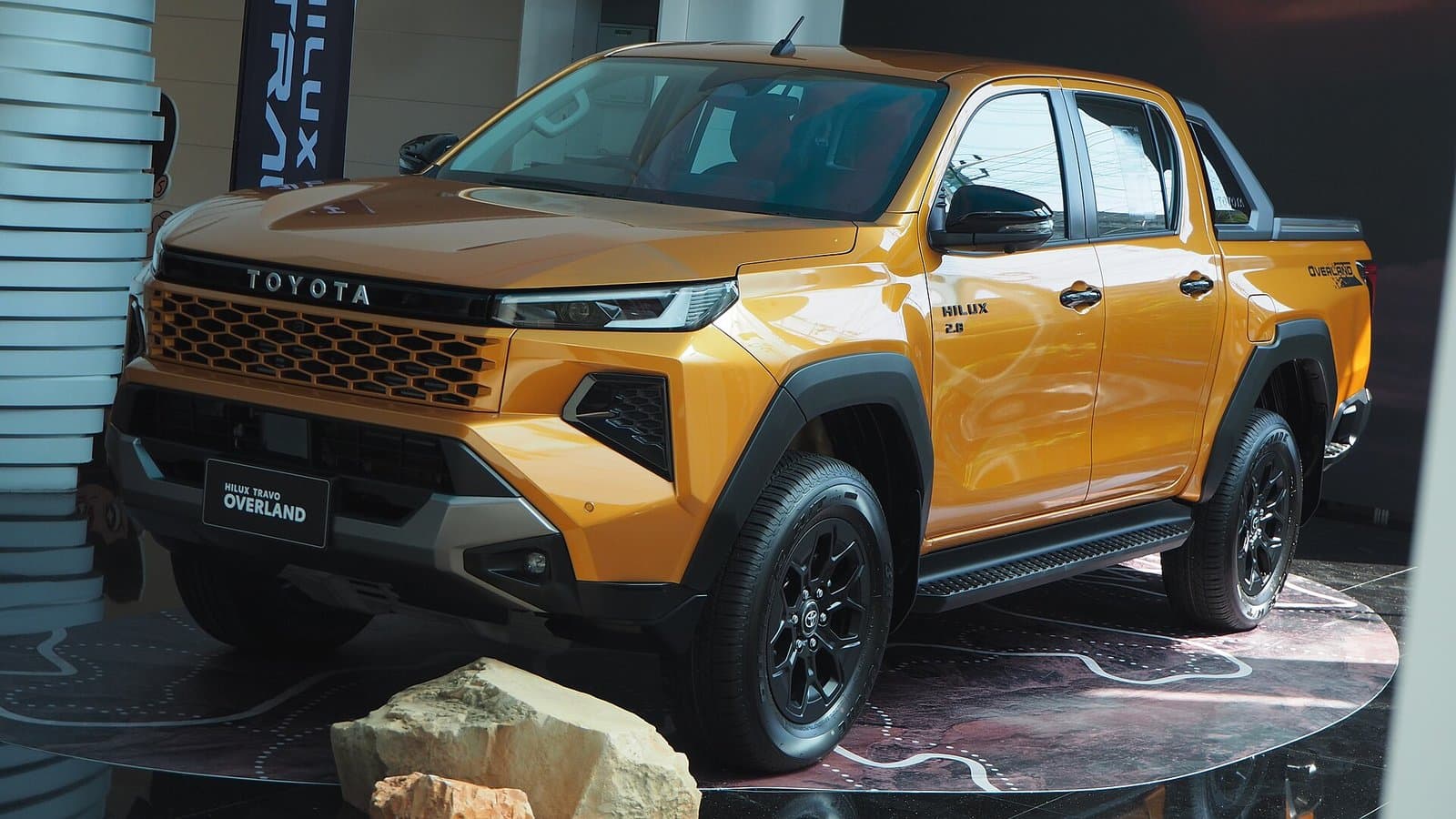
On a Toyota Hilux crossing Africa, the second battery was held by just three support points, none at the top. Two struts broke. The battery hung on a single bolt in thin wheel-arch metal, chafed a hydraulic pipe and tore a large hole in the arch.
Karin Theron set this out in a Tracks4Africa write-up of a seven-month Cape Town to Ethiopia trip, dated 6 November 2015. The Hilux covered 33,231 km and, she wrote, "did not miss a single beat". Almost everything that failed was something bolted on afterwards.
That matters to Indian owners of Fortuners, Thars, Jimnys and Gurkhas who add fridges, second batteries, long-range tanks and bash plates before a Spiti or Ladakh run. Neither source is about an Indian vehicle, and these are two accounts, not a pattern. But the failures are in accessories any rig can carry, and the fixes were cheap.
The fixes that held
The battery mount was redone at five points in Kampala. The semi-deep cycle battery had not run the fridge properly, so it was replaced in Lusaka, and Theron says a deep cycle battery is preferable.
A small leak in the stainless long-range tank was sealed temporarily by rubbing dry soap into the crack. She calls it temporary. She also questions mounting the spare wheel under the tank, since it can stress the tank when the wheel bottoms out.
Exhaust gases burnt an air suspension pipe and nearby wiring, and one unit lost pressure. Her advice: route air and electrical lines well away from the exhaust. The bash plate's rear fasteners worked loose and vibration stripped threads in the chassis. More frequent tightening checks and lock nuts would have prevented it.
Four tubeless rear tyres were punctured in the tread. Plugs pulled out on rough roads. Two new tyres were bought in Ethiopia and a second-hand rim in Kenya. She suggests tyre pressure indicators and two spares on rims. Three shock absorbers were replaced, and she says to keep installation receipts in case a guarantee applies.
Five dollars, and a long tow
A second account shows how small the real cause can be. Mercedes Lilienthal wrote in Driving Line on 24 January 2019 about a 1995 Suzuki Sidekick that lost power after Overland Expo West. The fuel filter was clean. A blocked catalytic converter was found, but the car still felt sluggish after it was replaced.
The culprit was a broken woodruff key on the crankshaft, which threw off the timing. The part cost five dollars. Her friend Andy fitted a new key and used high-temperature metal-bonding epoxy to reseat it. A technical service bulletin had called for a higher torque on the crankshaft pulley bolt, and this vehicle never received it. Friends arranged a flatbed to bring the car home.
Her other stories ended in garages offered by strangers. A Jeep Cherokee's failed rear leaf springs caused severe axle wrap in Moab, and the parts were fitted in a hotel parking lot. A Mitsubishi Delica's snapped rear brake shoe adjuster meant pumping the pedal until parts arrived from Japan.
Lilienthal's advice is plain. Carry basic tools, zip ties, duct tape, ratchet straps and repair tape. Tell key contacts your route and dates. Ask vehicle forums and groups for help. Theron adds a hand-operated winch for long trips.
Neither writer says what to do under warranty. The desk's suggestion: before fitting a battery, tank or drawer system on a vehicle still covered, ask your dealer in writing whether it affects the warranty, and ask if any service bulletin is open for your vehicle.
Lilienthal's friend Ray had a first step for any breakdown: put the kettle on.
Sources
- Vehicle and after-market fitment problems on our overland trip blog.tracks4africa.co.za
- Tales from the trails: what to do when things go wrong drivingline.com
Also in this story
Be the first to comment.
The Fortuner is more than a story here.
6 of your 7 lights are still off.