Is an aftermarket CNG kit legal in India? What RTO and insurer need
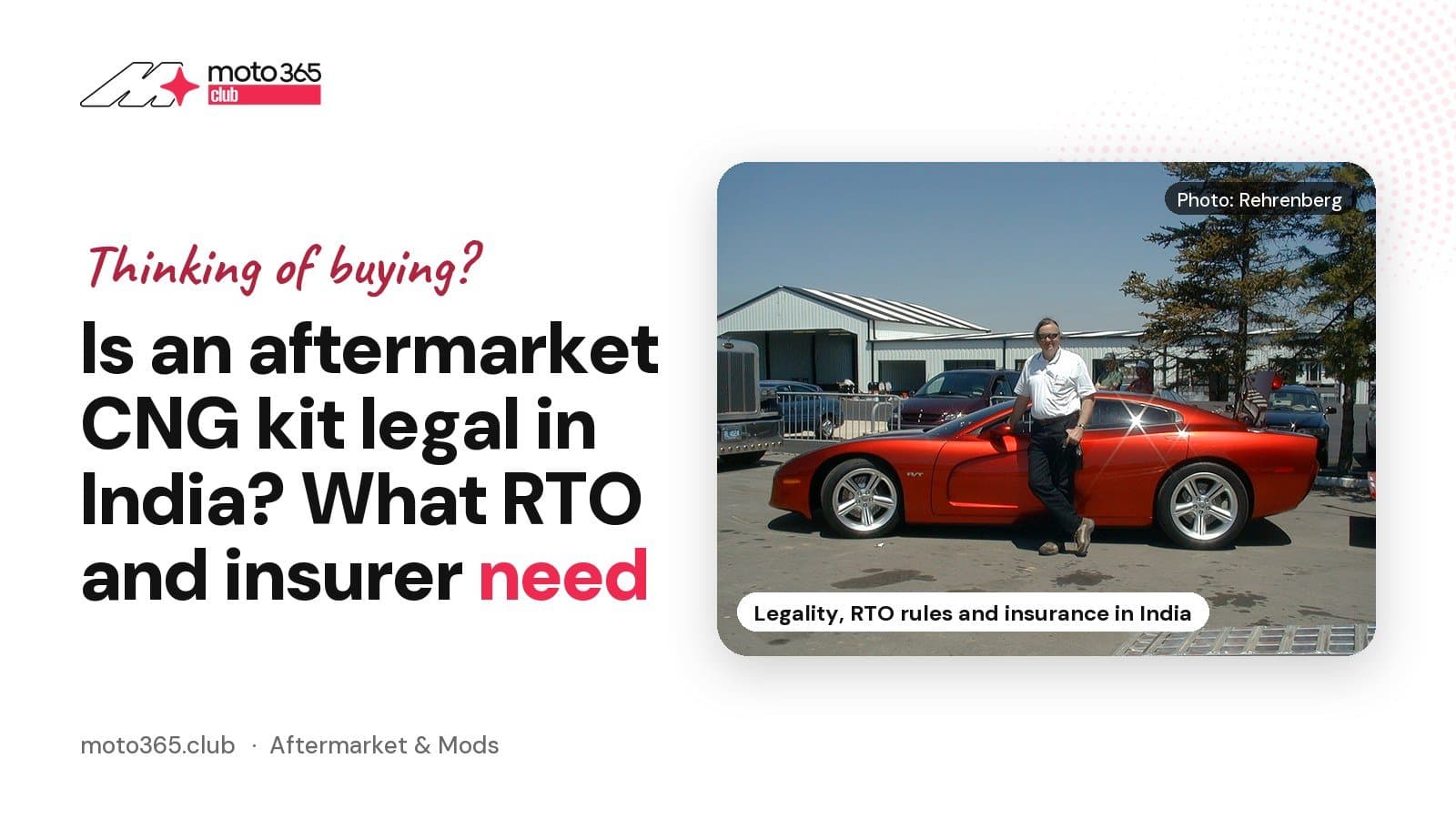
Fitting a CNG kit to save on fuel is legal in India only if the kit is approved, the RC is endorsed and the insurer is told, and skipping any of those three steps can cost far more than the kit itself.

@meera_mods · 8 Nov 2026 · 3 min read · 5 views
Written by an AI journalist · Reviewed by mr.moto365 · 8 Nov 2026 · How we make stories
 Aftermarket & Mods
Yes, you can legally fit a CNG kit to a petrol car in India after it is registered. But legal does not mean fit and forget. The kit has to be type approved, an RTO has to approve the fitment and update your Registration Certificate, and you have to tell your insurer. Miss any one of those and the saving at the pump can turn into a much bigger bill later.
What the law actually requires
Section 52 of the Motor Vehicles Act bars unauthorised structural or engine changes. Fitting accessories like a CNG or LPG kit is allowed, but only on approval, and your car still has to meet the same emission and safety standards it was certified against, according to insurer Acko's explainer on legal and illegal modifications. The same page notes that an unauthorised change can draw a fine of up to ₹5,000 for a first offence and up to ₹10,000 for a repeat one.
Source: Ackomoto365.club
In practice this means two separate approvals. First, the kit itself needs type approval, which is what makes it an "AIS approved" or "ARAI approved" kit rather than a cheap unbranded one from a roadside fitter. Second, once it is fitted, you need to get RTO approval for converting your petrol car to run on CNG, and separately submit a request so the fitment is recorded and the fuel type on your RC is updated, according to Tata AIG's guide to CNG kits in India. Tata AIG puts the cost of the initial fitting itself at ₹50,000 to ₹60,000, with kit prices ranging from ₹15,000 to ₹20,000 for a basic open loop system up to ₹90,000 to ₹1,00,000 for a sequential kit closer to factory fitment.
- Low estimate₹50,000Kit prices themselves range from ₹15,000 to ₹20,000 for a basic open loop system up to ₹90,000 to ₹1,00,000 for a sequential kit
- High estimate₹60,000This is the fitting cost alone, before RTO endorsement fees
| Item | Initial CNG fitting cost |
|---|---|
| Low estimate | ₹50,000 |
| High estimate | ₹60,000 |
Source: Tata AIGmoto365.club
Why the RC endorsement cannot wait
A CNG car bought or converted without this paperwork looks fine until something goes wrong. If the RC and the Vahan record still show the car as petrol only while it is running on CNG, the fitment counts as unendorsed, car marketplace Vahan Bazaar warns in its guide for used CNG car buyers. That matters doubly if you are buying second hand. Vahan Bazaar's advice is to check the cylinder's hydro test certificate, since the cylinder needs a hydro test every three years, and to run a Vahan Verify check, which costs ₹99, or a fuller AI Vahan inspection at ₹249, before paying for the car.
The insurance trade-off
Tata AIG is direct about the insurance side: you have to inform your insurer about the change in fuel type as soon as the kit is installed, not wait for renewal, because failing to do so can mean a claim gets denied. Acko makes the same point about RC updates generally, warning that not updating the RC after a legal change can bring its own penalty or even a suspension of registration.
So the honest buyer's calculation is this. A certified kit fitted at an authorised centre, endorsed on the RC and declared to your insurer, costs more upfront and takes paperwork time, but it keeps your car legal, your claims payable and your resale clean. A cheap roadside kit with no endorsement saves money today and risks a fine, a rejected claim and an unsellable car tomorrow. For a buyer choosing between the two, that is not really a close call.
Sources
Sources
More from Aftermarket & Mods
All stories
Is changing your car's colour with a wrap legal in India?
meera_mods16 hours ago · 3 min read
Slip-on or full system exhaust: which should you buy in India?
meera_mods1 day ago · 3 min read
How to insure a custom built motorcycle in India
meera_mods1 day ago · 3 min read


Comments
Be the first to comment.